

If you’ve been scrolling through DMs, comment sections, or group chats, chances are you’ve spotted the letters TBF attached to someone’s reply. It shows up on Snapchat, Instagram, TikTok, and regular text messages alike — and if you’re not part of the texting-slang crowd, it can leave you scratching your head. This guide breaks down everything you need to know about TBF: what it means, how people actually use it, the tone it carries, and how it compares to lookalike terms like TBH and RBF.
What Does TBF Mean in Text Messages?
Simple Definition
TBF stands for “To Be Fair.” It’s used when someone wants to introduce a balanced, honest, or slightly different perspective into a conversation — usually right before agreeing partially, disagreeing gently, or adding context that changes the tone of what was just said.
In short:
TBF = To Be Fair — a quick way to sound reasonable, balanced, or objective before making a point.
Why Is TBF So Popular in Texting and Social Media?
Texting culture rewards speed. Typing out “to be fair” takes a few extra seconds, so shortening it to three letters lets people keep conversations moving without losing the meaning. TBF also does something useful that many other slang terms don’t — it softens a statement. Instead of bluntly disagreeing or correcting someone, TBF signals that the speaker is being thoughtful and fair-minded, which makes the message feel less confrontational.
This is especially true in comment threads on TikTok, Instagram, and Reddit, where opinions clash constantly. TBF lets people push back on an argument without sounding rude or dismissive.
How TBF Is Commonly Used in Text Messages
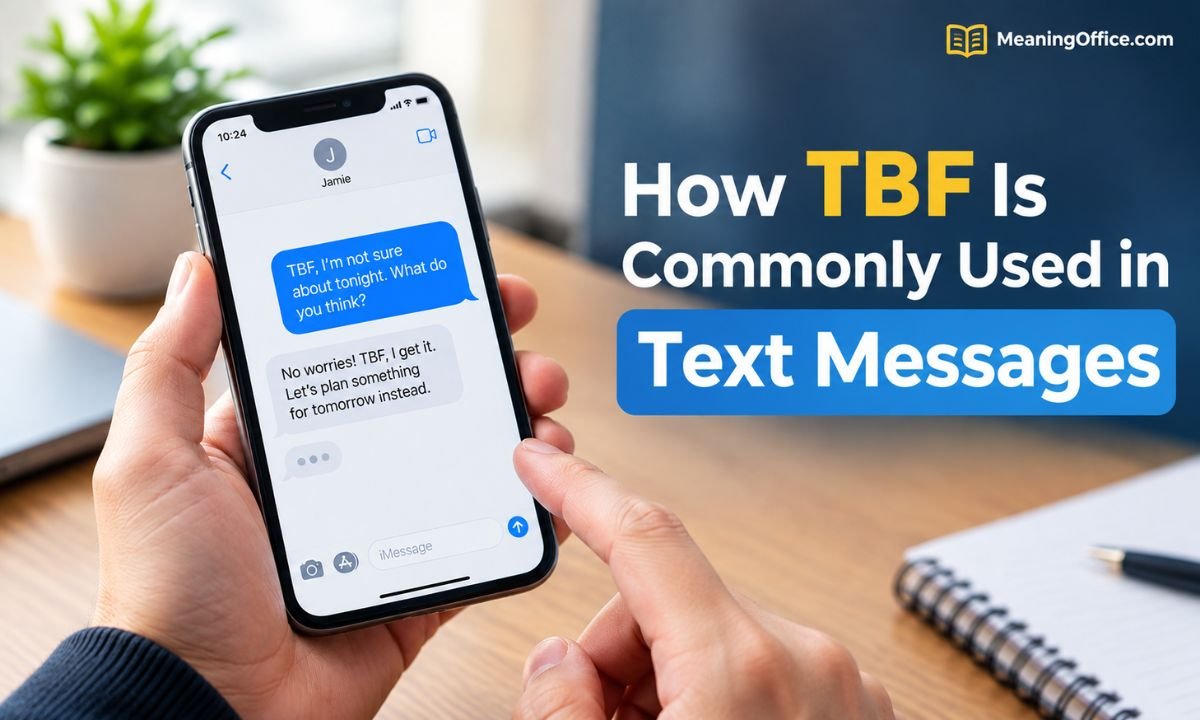
TBF typically shows up at the start of a sentence, though it can appear mid-message too. Here are the four main ways people use it.
1. To Add Balance to an Opinion
Someone shares a strong opinion, and TBF is used to bring in a more balanced view.
- “That show was boring.” → “TBF, the last episode was actually really good.”
2. To Soften Criticism
TBF takes the edge off a critical comment so it doesn’t sound harsh.
- “TBF, you probably should’ve left earlier.”
3. To Introduce a Contrasting View
It signals a shift in perspective without sounding argumentative.
- “TBF, not everyone sees it that way.”
4. To Justify an Action or Reaction
People use TBF to explain or defend a choice in a way that still sounds reasonable.
- “TBF, I did warn you this would happen.”
Tone and Emotional Context of TBF
TBF isn’t a one-tone word — its meaning shifts depending on context, punctuation, and the relationship between the people texting.
Common Tones Associated with TBF
| Tone | Example | Feeling |
| Playful | “TBF, you did eat the whole pizza.” | Light, joking |
| Sympathetic | “TBF, that exam was brutal.” | Understanding |
| Defensive | “TBF, you started it.” | Justifying |
| Sarcastic | “TBF, he’s always on time (never).” | Ironic |
| Neutral/objective | “TBF, both sides made good points.” | Balanced |
Not Usually Used For
- Formal apologies
- Serious or sensitive emotional topics
- Professional or corporate communication
- Expressing strong anger or hostility
Examples of TBF in Real-Life Text Conversations

- A: “He’s always late.” B: “TBF, traffic’s been terrible lately.”
- A: “I failed the quiz.” B: “TBF, it was way harder than usual.”
- A: “You’re obsessed with that game.” B: “TBF, it’s actually really fun.”
- A: “Why are you blaming me?” B: “TBF, you were the one who brought it up.”
These examples show how TBF works as a conversational cushion — it lets people agree, disagree, or explain themselves while still sounding fair.
Is TBF Formal or Informal?
TBF is strictly informal. It belongs in texts, DMs, social media comments, and casual chats — not in emails, reports, or professional messaging. If you wouldn’t say “to be fair” out loud in a boardroom the way you’d type it in a group chat, TBF probably isn’t the right fit either.
TBF vs TBH: What’s the Difference?
These two acronyms get mixed up constantly because they often appear in similar spots in a sentence.
| TBF (To Be Fair) | TBH (To Be Honest) | |
|---|---|---|
| Meaning | Introduces balance or fairness | Introduces honesty or a personal opinion |
| Common use | Softening disagreement, adding context | Sharing a blunt or candid thought |
| Tone | Diplomatic | Direct |
| Example | “TBF, he did apologize.” | “TBH, I don’t really like him.” |
Example Comparison
- TBF: “TBF, she probably didn’t mean it that way.”
- TBH: “TBH, I think she meant exactly that.”
Notice how TBF leans toward giving someone the benefit of the doubt, while TBH leans toward stating a personal truth, even if it’s uncomfortable.
Read More:O7 Meaning: What Does It Mean in Text & Social Media
Common Misunderstandings About TBF
1. TBF Is Not Always Defensive
While TBF can sound defensive in an argument, it’s just as often used to agree, sympathize, or add a lighthearted comment — the tone depends entirely on context.
2. TBF Is Not Sarcastic by Default
Sarcasm only comes through with specific wording, emojis, or context clues. On its own, TBF is neutral and genuine.
3. TBF Doesn’t Mean Agreement
Using TBF doesn’t necessarily mean the speaker agrees with the other person — it often means they’re simply acknowledging a valid point while still holding their own view.
Quick Answers: TBF Across Platforms and Contexts
Tbf meaning Instagram
On Instagram, TBF is used the same way as in texting — usually in comments or captions to add a fair or balanced remark, such as “Me and my tbf ❤️,” which is a separate, unrelated slang use meaning “toxic best friend” in some caption trends.
What dose TBF mean
This common misspelling of “does” still refers to the same abbreviation — TBF means “To Be Fair” in nearly all texting and social contexts.
TBF meaning in business
In rare formal or technical contexts, TBF can stand for “Total Batters Faced” (sports statistics) or appear in logistics/finance documents with entirely different meanings — it’s not standard business shorthand for “to be fair.”
TBF meaning medical
In medical or fitness terminology, TBF usually stands for Total Body Fat, a measurement unrelated to the texting slang.
What does tbf mean on Snapchat
On Snapchat, TBF carries the same casual meaning — “To Be Fair” — often used in streak chats or story replies to add a balanced comment.
Tbf meaning in football
In football and soccer chat, TBF is occasionally used informally the same way as elsewhere (“to be fair”), though it has no official sporting definition.
Tbf meaning TikTok
On TikTok, TBF frequently appears in comment sections during debates, usually to offer a fair counterpoint without sounding too harsh.
RBF meaning in text
RBF is a completely different term, standing for “Resting B**** Face,” referring to a person’s neutral facial expression that unintentionally looks annoyed or unfriendly — not to be confused with TBF.
When NOT to Use TBF in Text Messages
- In professional emails or workplace Slack messages with clients
- When discussing serious, sensitive, or emotionally heavy topics
- In formal writing, essays, or reports
- When your relationship with the other person doesn’t involve casual texting norms
Alternatives to TBF in Text Messages
Casual Alternatives
- “Ngl” (not gonna lie)
- “Honestly”
- “Real talk”
Softer Phrases
- “To be honest though”
- “In fairness”
- “I get what you mean, but”
TBF in Social Media and Online Culture
TBF has become a fixture of comment-section culture, especially in gaming communities, Reddit threads, and debate-heavy TikTok comments, where it’s used to critique or push back on an idea without sounding overly harsh. Its brevity fits the fast pace of scrolling feeds, and its balanced tone makes it a safer way to disagree publicly than blunter alternatives.
Why Understanding TBF Matters
Slang like TBF isn’t just internet noise — it shapes how tone is read in digital conversations. Misreading TBF as sarcastic or defensive when it was meant kindly (or vice versa) can cause real misunderstandings. Knowing its true meaning helps you interpret messages correctly and use it appropriately yourself.
Read More:7 Powerful Facts About Emo Meaning in Text
FAQs
What does TBF mean in a text message?
TBF stands for “To Be Fair” and is used to introduce a balanced, honest, or slightly contrasting opinion in a conversation.
Is TBF the same as TBH?
No. TBF (To Be Fair) softens or balances a statement, while TBH (To Be Honest) introduces a direct, personal opinion.
Can TBF be used sarcastically?
Yes, but only with the right context, tone, or emojis — on its own, TBF is neutral and genuine.
Is it okay to use TBF at work?
Generally no. TBF is informal slang best kept to casual texting and social media, not professional communication.
What does TBF mean on Snapchat or Instagram?
It carries the same meaning as in texting — “To Be Fair” — typically used in captions or reply comments.
Does TBF always mean disagreement?
No. TBF can be used to agree, sympathize, joke, or simply add context — not just to disagree.
Conclusion
TBF is a small abbreviation that carries a lot of conversational weight. Standing for “To Be Fair,” it helps people soften criticism, add balance, and express honest opinions without sounding harsh — whether that’s in a text thread, a TikTok comment, or a Snapchat reply. While it’s strictly casual and best avoided in formal settings, understanding TBF (and how it differs from lookalikes like TBH and RBF) makes it much easier to read tone correctly and text with confidence.
1 thought on “7 Powerful Facts About TBF Meaning in Text & Slang”