

You text back within minutes. They reply two days later with a “hey stranger” and vanish again. If that sounds familiar, you may be dealing with breadcrumbing.
This guide explains the breadcrumbing meaning in plain language. It covers the signs, the psychology, the emotional toll, and practical ways to respond.
What Is Breadcrumbing?
Simple Definition
Breadcrumbing is when someone sends just enough attention to keep you interested, but never puts in the effort to build a real relationship.
The “breadcrumbs” are small gestures: a flirty text, a random like, a “we should hang out sometime.” They feel hopeful, but they never add up to a meal.
The Origin of the Term Breadcrumbing
The term comes from the fairy tale of Hansel and Gretel, where a trail of crumbs leads somewhere. In dating, the trail leads nowhere. It entered everyday dating vocabulary in the mid-2010s, alongside terms like ghosting and benching. As dating apps and social media grew, so did the number of easy, low-effort ways to string someone along.
Breadcrumbing Meaning in Different Contexts
Breadcrumbing meaning (slang): Casually leading someone on with minimal effort, without any intention to commit.
Breadcrumbing on Instagram: Liking your posts, reacting to stories, or dropping a fire emoji without ever starting a real conversation or making plans.
Breadcrumbing in a relationship: Giving a partner or dating interest occasional affection or vague promises about “the future” while avoiding real commitment.
Breadcrumbing in friendship: A friend who sends “we need to catch up!” messages but never schedules anything, or who reaches out only when they need something.
Breadcrumbing psychology: A pattern of intermittent reinforcement, where unpredictable rewards keep someone hooked and hopeful.
Breadcrumbing in a sentence: “He kept replying to my stories but never asked me out. I think I was being breadcrumbed.”
How Breadcrumbing Works

Breadcrumbing follows a predictable cycle:
- Interest is sparked. You connect, and the flirting feels real.
- Attention fades. Replies slow down, and plans stay vague.
- A breadcrumb appears. A meme, a “thinking of you,” or a story like.
- Hope returns. You reply enthusiastically and invest again.
- Repeat.
The other person gets the ego boost of being wanted. You get uncertainty and a lot of waiting.
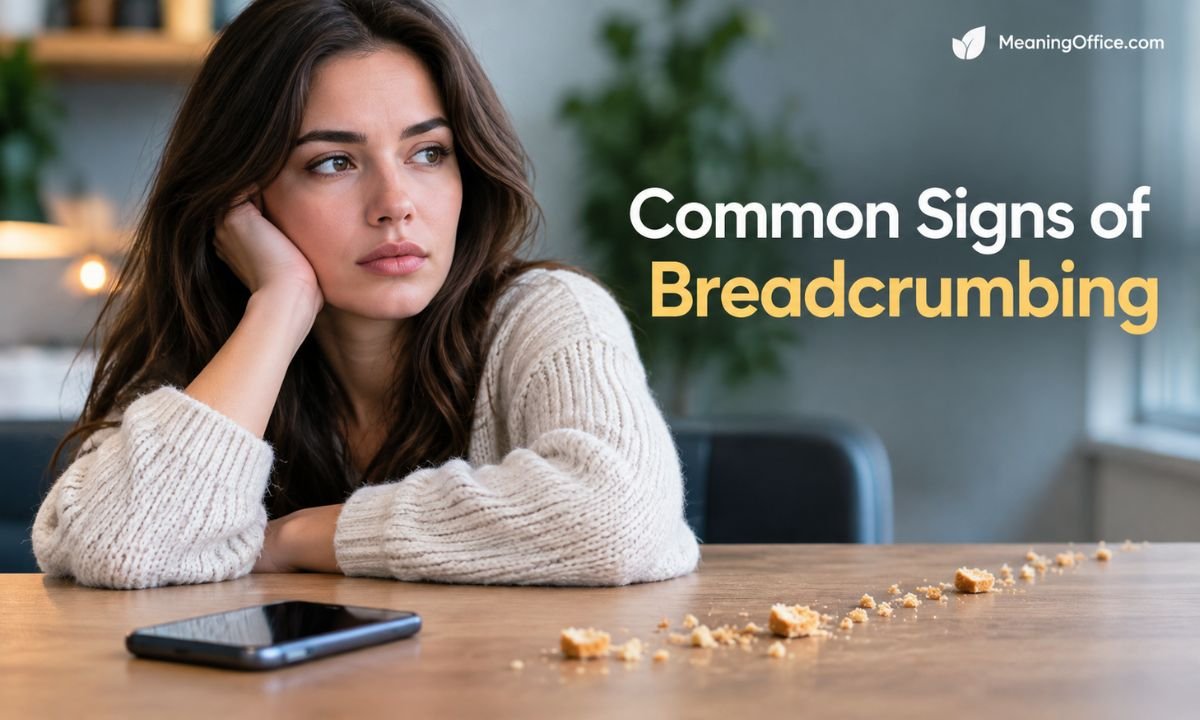
Common Signs of Breadcrumbing
1. Inconsistent Communication
One week you talk daily. The next, silence. There’s no pattern you can rely on.
2. They Never Commit to Plans
You hear “let’s grab coffee soon!” but never a date, time, or place. Or plans get cancelled at the last minute, again and again.
3. Frequent Social Media Interaction
They like your photos, watch every story, and comment with emojis. But online attention rarely turns into real conversation.
4. Mixed Signals
They say they miss you, then go quiet. They flirt heavily, then act like nothing happened. Hot-and-cold behavior is a classic marker.
5. Conversations Stay Surface-Level
You share something personal and get “haha same” in return. Deep or meaningful topics get dodged.
6. They Contact You When Convenient
Messages arrive late at night, when they’re bored, or when they need something. You’re an option, not a priority.
7. Long Gaps Followed by Sudden Messages
After weeks of silence, you get a casual “Hey, how’ve you been?” with no acknowledgment of the gap.
Quick checklist:
- Do they follow through on what they say?
- Do you know where you stand?
- Is the effort balanced?
If you answered “no” to most of these, take note.
Examples of Breadcrumbing
Example 1: Online Dating
You match, chat for a few days, and things feel promising. Then they stop replying for a week and resurface with “sorry, crazy week!” They keep the chat alive but never suggest meeting.
Example 2: Social Media
Someone views every story you post and sends a fire emoji occasionally. Months pass without one real conversation or invitation.
Example 3: Ex-Partner Contact
An ex texts “I was just thinking about you” every few months. They never discuss getting back together, but they also never let go.
Example 4: Workplace Breadcrumbing
Breadcrumbing isn’t only romantic. A manager who repeatedly hints at a promotion (“keep up the good work, big things ahead”) without ever giving a timeline is using the same tactic to keep you motivated and loyal.
Why Do People Breadcrumb Others?
Motives vary. Some people do it on purpose, and others don’t fully realize they’re doing it.
- Seeking validation: Your attention feeds their self-esteem.
- Fear of commitment: They want connection but panic at anything serious.
- Keeping options open: You’re the “maybe” while they look for something better.
- Loneliness: They want company but aren’t emotionally invested.
- Narcissistic tendencies: Some enjoy the power of keeping someone hooked.
- Boredom: You’re a distraction, not a priority.
None of these reasons make the behavior okay. But they do show that breadcrumbing usually says more about the breadcrumber than about you.
Read More:7 Powerful Facts About TBF Meaning in Text & Slang
The Psychology Behind Breadcrumbing
Breadcrumbing works because of intermittent reinforcement. When rewards arrive unpredictably, the brain craves them more, the same mechanism that keeps people pulling a slot machine lever.
Each unexpected message triggers a small hit of anticipation and relief. Because you never know when the next one will come, you keep checking your phone and holding out hope.
Attachment styles play a role too. People with anxious attachment may be more vulnerable to this cycle, while those with avoidant tendencies may be more likely to create it. Understanding this can help you see the pattern without blaming yourself.
Emotional Effects of Being Breadcrumbed

Living in uncertainty takes a toll. Common effects include:
- Confusion: You keep replaying messages, trying to decode what they mean.
- Anxiety: You feel on edge, waiting for the next reply.
- Lower self-esteem: You start asking, “What’s wrong with me?”
- Emotional dependency: Small gestures start to feel like lifelines.
- Wasted time: Months can pass invested in something that was never going anywhere.
If breadcrumbing is affecting your sleep, mood, or daily life, talking with a therapist or counselor can help.
Breadcrumbing vs. Genuine Interest
| Genuine Interest | Breadcrumbing |
|---|---|
| Consistent communication | Sporadic, unpredictable contact |
| Makes specific plans | Vague “let’s hang out sometime” |
| Follows through | Cancels or reschedules often |
| Asks about your life | Keeps chats shallow |
| Clear about intentions | Keeps things ambiguous |
| Makes you feel secure | Makes you feel uncertain |
Breadcrumbing vs. Ghosting
Breadcrumbing
The person stays in contact, but only in small, low-effort doses. You’re never fully in or out.
Ghosting
The person cuts off all contact without explanation. It ends abruptly.
Ghosting is a clean (if painful) break. Breadcrumbing drags out uncertainty, which is why many people find it harder to walk away from.
Breadcrumbing vs. Benching
Benching
Someone keeps you “on the bench” as a backup option while pursuing other people. You may get regular attention, but you’re not their first choice.
Breadcrumbing
The attention is minimal and inconsistent, and the goal is simply to keep you interested without giving anything real.
| Breadcrumbing | Benching | |
|---|---|---|
| Level of attention | Low, sporadic | Moderate, when it suits them |
| Main goal | Keep you hooked | Keep you as a backup |
| Clarity | Very vague | Vague, but you may see more effort |
The two often overlap, and both leave you in limbo.
Modern Technology and Breadcrumbing
Technology made breadcrumbing easier than ever.
Social Media Platforms
Likes, story views, and reactions cost nothing, so it’s easy to look engaged without being engaged.
Dating Apps
With endless matches, some people keep multiple conversations going at low effort.
Messaging Apps
Read receipts, memes, and one-word replies let people stay “present” without real communication.
The tools aren’t the problem. But they make low-effort attention look like real interest.
How to Tell If You’re Being Breadcrumbed
Ask yourself these five questions:
Do They Consistently Follow Through?
Words should match actions.
Are You Doing Most of the Work?
Watch who starts conversations and makes plans.
Is Communication One-Sided?
Effort should flow both ways.
Are Their Intentions Clear?
If you’re guessing, that’s a sign.
Has Progress Been Made?
After weeks or months, the connection should have moved forward.
If the honest answers worry you, trust your instincts.
How to Respond to Breadcrumbing
1. Recognize the Pattern
Look at the overall trend, not individual messages. One slow reply means little. A months-long cycle means a lot.
2. Set Clear Boundaries
Decide what you will and won’t accept. For example: “I’m not available for last-minute plans or vague check-ins.”
3. Ask Direct Questions
Try: “I enjoy talking to you, but I’d like to know where this is going. What are you looking for?” A clear answer, even a disappointing one, beats ongoing guessing.
4. Stop Chasing
Match their effort instead of overcompensating. If they want to see you, they’ll make it happen.
5. Focus on Self-Worth
Invest in friends, hobbies, and goals. Your value doesn’t depend on anyone’s replies.
6. Move On If Necessary
If nothing changes after you’ve been direct, step back. You can mute, unfollow, or end contact to protect your peace.
Can Breadcrumbing Be Unintentional?
Yes. Some people are genuinely unsure about their feelings, overwhelmed by life, or uncomfortable with intimacy. They may not realize their mixed signals are hurting you.
But the impact on you is the same. Whether it’s intentional or not, you deserve clarity, and you can decide what’s acceptable regardless of their intent.
How to Avoid Being Breadcrumbed
Know What You Want
If you’re seeking a committed relationship, say so early.
Watch Actions Closely
Consistent behavior tells you more than compliments.
Don’t Ignore Red Flags
Repeated cancellations and vagueness are patterns, not accidents.
Maintain Healthy Boundaries
Don’t drop everything each time they resurface.
Value Mutual Effort
Healthy connections feel balanced.
Healthy Alternatives to Breadcrumbing
If you’re the one who’s been sending crumbs, here’s what to do instead:
- Be honest about your intentions, even if they’re uncertain.
- Communicate clearly when you’re not ready for something serious.
- Give people the chance to make their own decisions with full information.
- Step back gracefully instead of keeping someone hanging.
Honest communication is kinder than mixed signals, and it saves everyone time.
Read More:THB Meaning in Text: 7 Powerful Facts You Should Know
FAQs
What is breadcrumbing in simple terms?
It’s giving someone small, occasional bits of attention to keep them interested without any real commitment.
Is breadcrumbing a form of emotional abuse?
It can be emotionally harmful and manipulative, especially when it’s deliberate or part of a wider pattern of control.
What does breadcrumbing mean on Instagram?
It means liking posts or reacting to stories to stay on someone’s radar without ever starting a real conversation.
Why do people breadcrumb?
Common reasons include seeking validation, fear of commitment, keeping options open, loneliness, or boredom.
What’s the difference between breadcrumbing and ghosting?
Breadcrumbing means sporadic, low-effort contact. Ghosting means cutting off contact completely.
Can breadcrumbing happen in friendships?
Yes. It looks like vague “let’s catch up” messages that never turn into real plans.
How do I stop being breadcrumbed?
Recognize the pattern, ask direct questions, set boundaries, and step away if their behavior doesn’t change.
Can someone breadcrumb without meaning to?
Yes. Confusion, avoidance, or poor communication can cause it, though the effect on you is still real.
Final Thought
Breadcrumbing thrives on ambiguity. Once you understand the breadcrumbing meaning and recognize the signs, the confusion loses its power. You don’t need to decode mixed signals or wait for someone to decide you’re worth their time.
Look at actions, ask for clarity, and protect your energy. The right person won’t leave you guessing.
2 thoughts on “7 Key Breadcrumbing Meaning Signs & How to Handle It”