

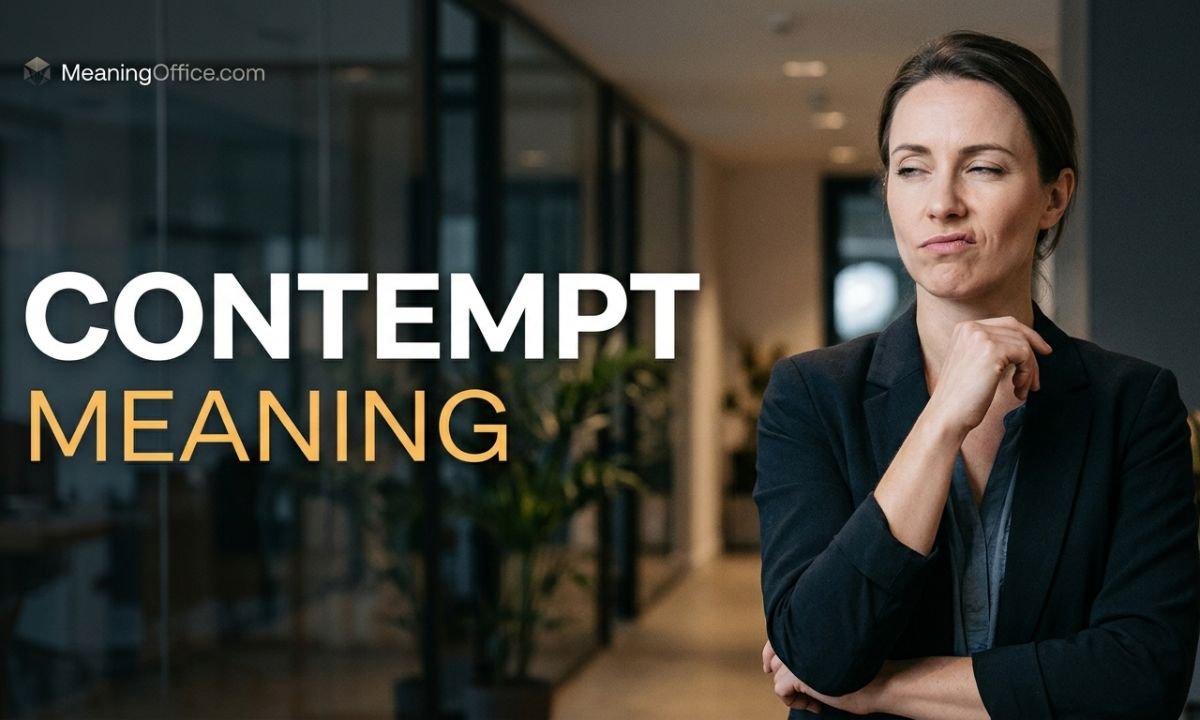
Contempt means feeling that someone or something is worthless or beneath you. It is stronger than dislike or anger. When you feel contempt, you look down on a person. You think they do not deserve respect or kindness. People often show it through a cold voice, an eye roll, or a mocking smile.
You may hear this word in daily life, in movies, and in relationships. Many people confuse it with hate or disgust, but it is not the same. In this article, you will see 5 clear examples to understand the meaning easily. You will also learn 5 common mistakes people make when they use this word.
What Does Contempt Meaning in Text?
In text, contempt means open scorn or disrespect. It is not slang or a texting abbreviation. It is a real English word, and people use it in messages, captions, and comments to describe an attitude.
Say a friend texts, “He looked at my work with total contempt.” They mean he looked at it as if it were worthless.
Simple Definition
Contempt is the feeling that a person or thing is worthless, unworthy of respect, and deserving of scorn.
It has three parts:
- Strong dislike
- Zero respect
- A sense of being better than the other person
The word came into English in the 14th century from the Latin contemptus, which means “scorn.”
Can Contempt Have Multiple Meanings?
Yes. Contempt has three main meanings.
| Meaning | What It Describes | Example |
|---|---|---|
| Emotional | A feeling of scorn and superiority | “She spoke with contempt.” |
| Relationship | A toxic behavior between partners | “Eye-rolling is a sign of contempt.” |
| Legal | Disobeying or disrespecting a court | “He was held in contempt of court.” |
It can also mean ignoring a rule as if it doesn’t matter. For example: “He drove with contempt for safety.”
Contempt Meaning in a Relationship
In a relationship, contempt means treating your partner as lesser than you. Dr. John Gottman, a well-known marriage researcher, lists it as one of the “Four Horsemen.” The other three are criticism, defensiveness, and stonewalling.
Gottman’s work found that contempt is the strongest warning sign that a relationship is in trouble. Criticism attacks a behavior. Contempt attacks the person and claims moral superiority.
Common signs include:
- Eye-rolling
- Sneering
- Mocking or mimicking your partner
- Name-calling
- Hostile sarcasm
What Does Contempt Mean Emotionally?
Emotionally, contempt is a mix of anger and disgust. Psychologists often call it a “cold” emotion. A person feeling contempt may not shout at all. They may look away, smirk, or go quiet.
Anger says, “I’m upset with you.” Contempt says, “You’re not worth my upset.”
That is why it hurts so much. It makes the other person feel despised and small.
Contempt Meaning in Law
In law, contempt means disobeying or disrespecting a court or legislative body. Judges use it to protect their authority.
There are two common types:
- Civil contempt: ignoring a court order, such as not paying court-ordered support.
- Criminal contempt: disrupting a hearing or insulting the court.
You may hear the phrase “held in contempt.” It means a judge decided someone broke the court’s rules. The result can be a fine or jail time.
Where Is Contempt Used?
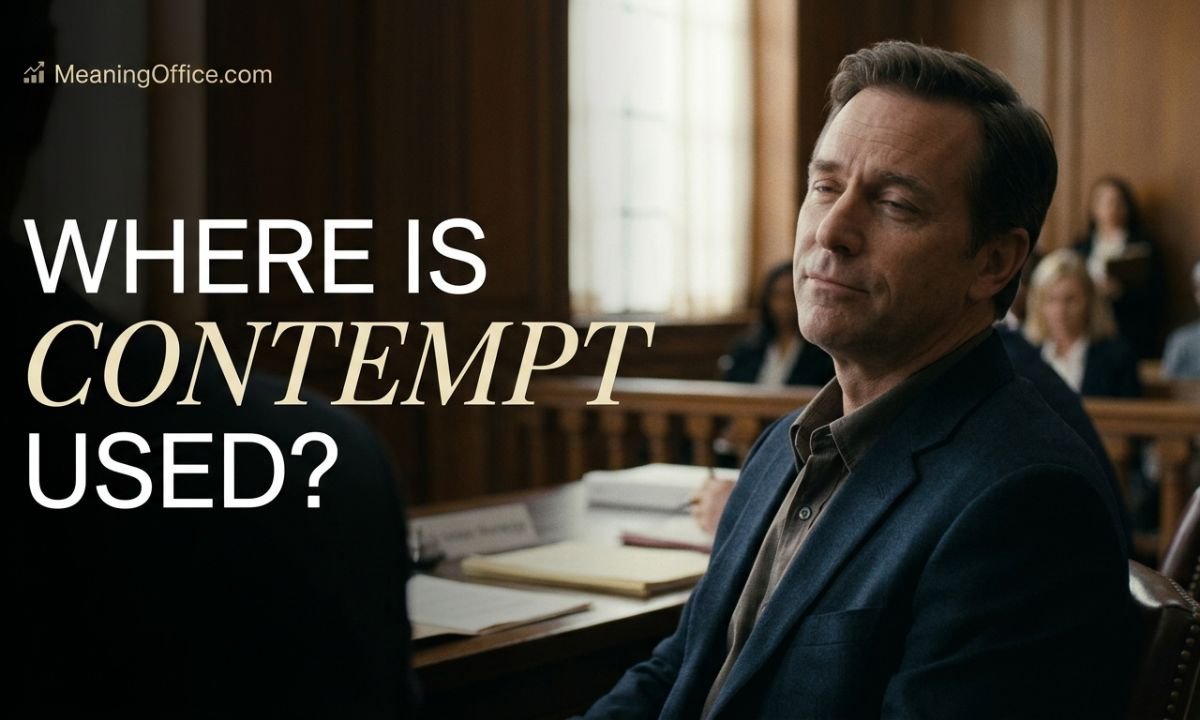
Contempt shows up wherever people share opinions. The tone changes by platform.
Text Messages
People use it to describe attitudes. Example: “Her reply was full of contempt.”
You will see it in captions, quotes, and comments about public figures or events. It often appears in longer, serious posts.
TikTok
Creators use it in relationship and psychology videos. Many explain contempt as a red flag in dating.
X (Formerly Twitter)
Users use it in political threads and news reactions. Phrases like “open contempt for voters” are common.
Older users often use it in long posts, family debates, and news comments.
Relationship and advice forums use it a lot. Posters ask, “Is my partner showing contempt?”
Professional Writing
News reports, legal papers, essays, and psychology articles all use the word. In these settings it is formal and precise.
Who Commonly Uses Contempt?
Different groups use the word for different reasons.
- Writers and journalists describe attitudes and conflicts.
- Lawyers and judges use the legal meaning.
- Therapists and coaches use it to describe toxic communication.
- Students learn it in vocabulary lists and exam prep.
- Everyday speakers use it in heated moments.
Examples of Contempt in Conversation
Here are five clear examples of contempt in real sentences.
Example 1: Relationship. “You always roll your eyes when I talk. That’s contempt, and it hurts.”
Example 2: Workplace. “He treated the new hires with contempt and never answered their questions.”
Example 3: Court. “The judge held her in contempt after she ignored the order.”
Example 4: News. “The senator showed open contempt for the committee.”
Example 5: Everyday life. “She looked at my old phone with contempt and laughed.”
Each one shows scorn, not just annoyance.
Is Contempt Positive or Negative?
Contempt is negative. It is never a compliment. It describes disrespect, scorn, and superiority.
There is one exception in phrasing. People sometimes say they have contempt for something bad, like lies or cruelty. That still describes a strong rejection, but it is aimed at something they believe deserves it.
Is Contempt Rude?
Yes. Showing contempt is rude and often hurtful. The word itself is neutral because it only describes the behavior. Saying “I feel contempt for that rule” is not rude. Treating a person with contempt is.
Is Contempt Friendly?
No. Contempt is the opposite of friendly. It pushes people away. Friendly speech has warmth. Contempt has distance and judgment.
Does Contempt Have a Flirty Meaning?
No. Contempt has no flirty meaning. Playful teasing may look like it from far away, but real contempt feels cold and insulting.
Contempt Meaning Example
A quick example helps:
“He answered her question with a sneer, full of contempt.”
The sneer shows scorn. The speaker thinks the question was beneath him.
When to Use Contempt
Use the word when you want to describe real scorn or disrespect. It works well in these cases:
- Describing a character or attitude in writing.
- Explaining toxic behavior in a relationship.
- Reporting legal events, such as contempt of court.
- Expressing strong moral rejection of something wrong.
- Studying psychology or communication.
When Not to Use Contempt
Skip it when the feeling is mild. Do not say “contempt” for simple annoyance or a small disagreement.
Avoid it in these cases:
- Light jokes between friends, since it sounds harsh
- Describing a mild dislike, like a food you don’t enjoy
- Insulting someone on purpose, since the word signals hostility
Can You Use Contempt in Professional Chats?
Yes, with care. It is fine in formal writing, such as reports or legal notes. In a work chat, avoid accusing a coworker of showing contempt unless you are raising a serious issue. A softer phrase like “disrespectful tone” is often better.
Why Do People Use the Word Contempt?
People reach for this word because it is exact. “Anger” does not capture the cold, superior feeling. “Hate” is too wild. Contempt fits when someone looks down on another person.
Other reasons include:
- It sounds strong and serious.
- It names a feeling people struggle to explain.
- It has legal and psychological weight.
Contempt Meaning in English
In plain English, contempt means “open disrespect.” Dictionaries describe it as the feeling that someone or something is worthless. Common phrases include:
- “Hold in contempt”: to scorn someone, or a court ruling against someone
- “Beneath contempt”: so bad that even scorn is too good for it
- “Contempt for”: a lack of respect toward something
- “Treat with contempt”: to act as if someone is worthless
Similar Words and Alternatives
Several words are close to contempt, but each has a slightly different shade.
| Word | Meaning | Difference From Contempt |
|---|---|---|
| Disrespect | Lack of respect | Milder and more general |
| Disdain | Looking down on something | Very close, often quieter |
| Scorn | Open mockery | More vocal and cutting |
| Hatred | Intense dislike | Hot and emotional, not always superior |
| Disapproval | Thinking something is wrong | Much milder |
Disrespect
Disrespect is a lack of courtesy. A person can be rude without feeling superior. Contempt is deeper.
Disdain
Disdain is almost a twin. It describes looking down on someone as unworthy. It often feels calmer and more private than contempt.
Scorn
Scorn is contempt shown out loud. It usually involves mockery or harsh words.
Hatred
Hatred is a burning feeling. Contempt is colder. You can hate someone you respect, but you cannot feel contempt for someone you respect.
Disapproval
Disapproval means you think something is wrong. It does not include the “you’re beneath me” feeling.
Read more:Sussy Baka Meaning
Common Mistakes About Contempt
Many learners mix up this word. Here are five mistakes to avoid.
Mistake 1: Confusing Contempt With Condemn
The words sound alike, but they are unrelated. To condemn means to strongly criticize or sentence. Contempt is a feeling of scorn.
- Wrong: “The judge contempted the man.”
- Correct: “The judge condemned the act.”
Mistake 2: Using Contempt as a Verb
Contempt is a noun. The verb forms are “contemn” (rare and formal) or “show contempt for.”
- Wrong: “She contempts her boss.”
- Correct: “She has contempt for her boss.”
Mistake 3: Mixing It Up With Contemptuous and Contemptible
These two adjectives look alike but differ.
- Contemptuous describes the person who feels scorn.
- Contemptible describes the person or thing that deserves scorn.
Example: “His contemptuous smile hid his contemptible plan.”
Mistake 4: Thinking Contempt Is Just Anger
Anger is hot and often loud. Contempt is cold and says someone is beneath you. You can feel angry at an equal. You feel contempt for someone you look down on.
Mistake 5: Using It for Mild Dislike
Contempt is a strong word. Saying “I have contempt for Mondays” sounds dramatic. Use “dislike” or “can’t stand” for small things.
Contempt in Everyday Life
You may already see contempt around you.
- A sibling rolls their eyes whenever you speak.
- A manager mocks an idea before hearing it.
- A commenter sneers at strangers online.
- A partner uses sarcasm as a weapon.
Small moments add up. Over time, contempt wears down trust and respect.
If you notice it in yourself, try these steps:
- Pause before you answer.
- Describe your feeling instead of attacking the person.
- Name a need, such as “I need more help at home.”
- Look for what you respect in the other person.
- Build appreciation with small thank-yous.
Gottman’s research suggests that building a culture of respect and appreciation is the long-term fix.
Why Understanding Contempt Matters
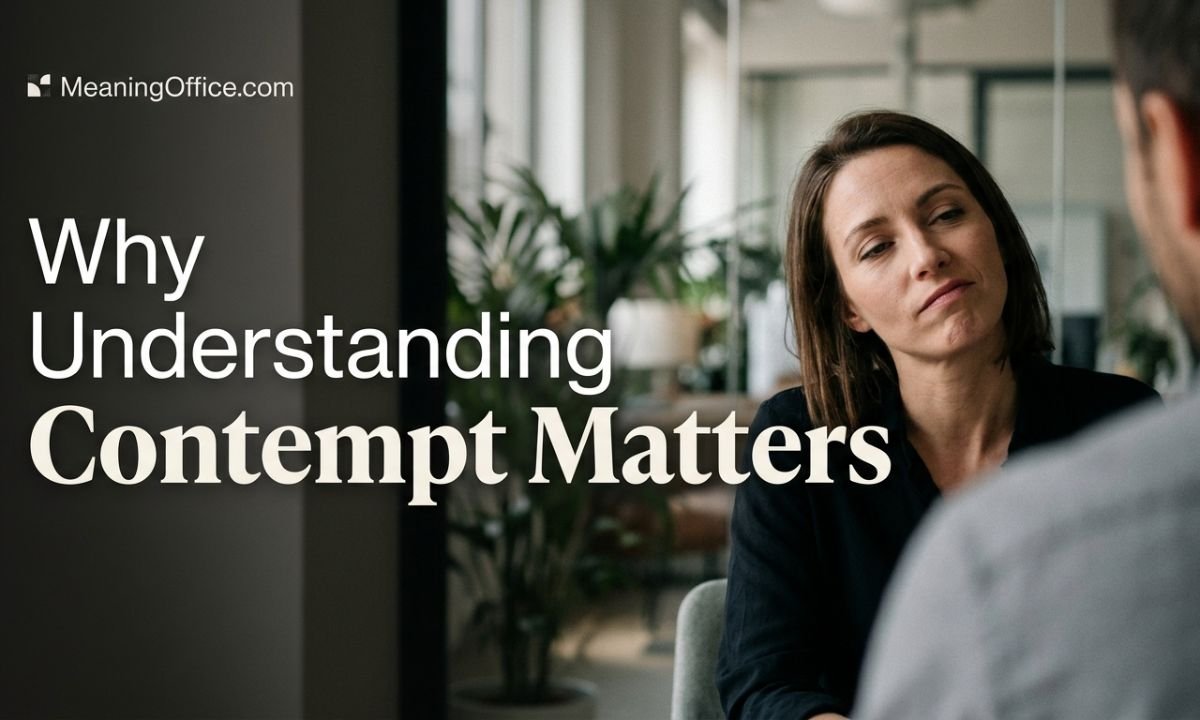
Knowing this word helps you spot harmful behavior early. It helps you write more clearly, too.
It also protects your relationships. Contempt does not stay small. It spreads, and the other person feels worthless. If you spot it, you can stop it, repair the hurt, or set a boundary.
For students and writers, the word adds precision. For anyone reading legal news, it clears up what “held in contempt” really means.
FAQs
What does contempt mean in simple words?
Contempt means feeling that someone or something is worthless and deserves scorn.
Is contempt an emotion?
Yes. Psychologists see it as a mix of anger and disgust, often with a feeling of superiority.
What is an example of contempt?
Rolling your eyes and sneering while your partner speaks is a classic example.
What does “held in contempt” mean?
It means a judge decided a person disobeyed or disrespected the court.
Is contempt the same as hate?
No. Hate is intense dislike, while contempt is cold scorn that looks down on someone.
Why is contempt bad in a relationship?
It makes your partner feel despised and worthless, and research ties it to relationship breakdown.
Is contempt slang?
No. It is a standard English word, not a texting abbreviation.
What is the difference between contempt and disdain?
They are very close. Disdain is usually quieter, while contempt can be more open and hostile.
Can you feel contempt for yourself?
Yes. People sometimes feel scorn toward their own actions, often called self-contempt.
How do you respond to contempt?
Stay calm, name the behavior, and set a boundary. If it is constant, consider talking to a counselor.
Conclusion
Contempt is a strong feeling of looking down on someone. It means you think a person is worthless or beneath you. It is not just anger or dislike. It comes with a lack of respect, and people often show it through words, tone, or looks.
Now you know the meaning, the five examples, and the five common mistakes. Use the word with care and pick the right moment for it. Do not mix it up with hate, disgust, or simple anger. When you use it correctly, your writing and speaking will sound clear and confident.
1 thought on “Contempt Meaning: 5 Clear Examples & 5 Common Mistakes”