

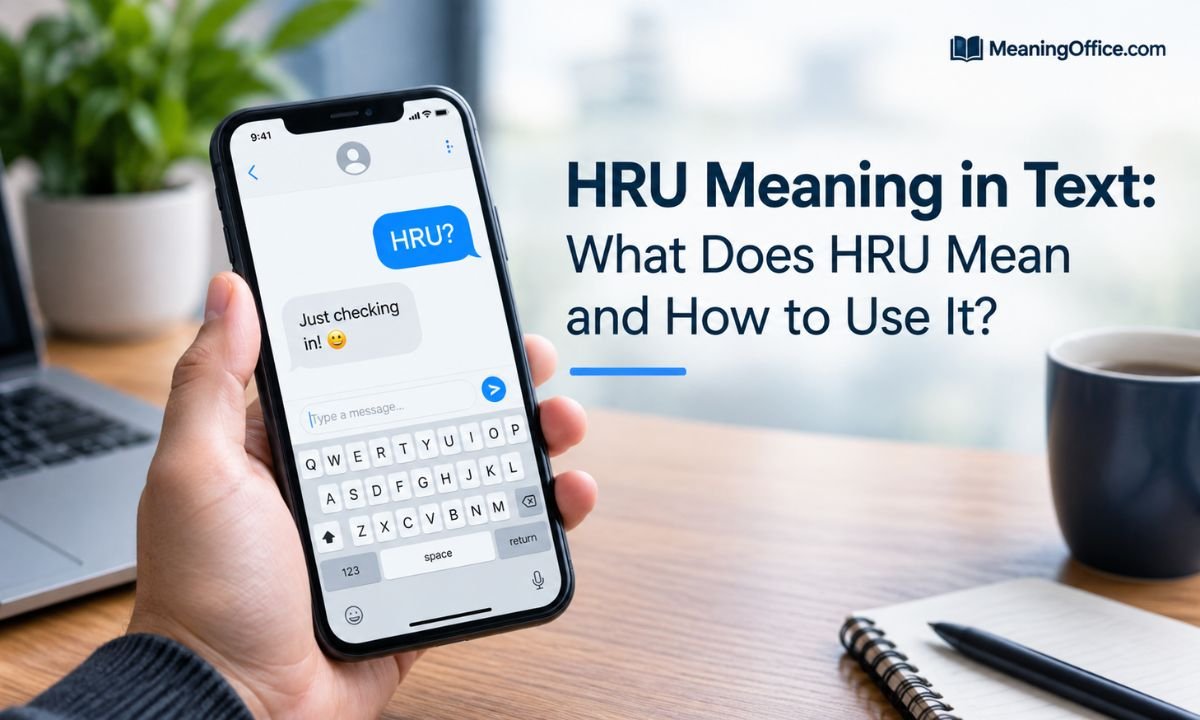
You get a message that says “hey, hru?” and you pause for a second. Is it a typo? Is it slang? The good news is that it’s simple, and you’ve probably already used something like it.
HRU is one of the most common abbreviations in texting. This guide explains what HRU means, where it’s used, how to reply, and when to skip it.
What Does HRU Mean in Text?
HRU means “how are you?” People type it in text messages, DMs, and chat apps as a quick way to ask how someone is doing.
Simple Definition of HRU
HRU is a short, casual greeting. It asks about a person’s mood, day, or general well-being without typing the full question.
What Does HRU Stand For?
Each letter stands for one word:
| Letter | Stands for |
|---|---|
| H | How |
| R | Are (the letter “R” sounds like “are”) |
| U | You (the letter “U” sounds like “you”) |
The “R” and “U” shortcuts are classic texting shorthand, the same style as “r u ok?” or “c u later.”
Why Is HRU Used in Texting?

Why People Use HRU
People use HRU for three main reasons:
- Speed: It’s faster to type on a phone keyboard.
- Tone: It sounds relaxed, not stiff.
- Habit: Texting slang spreads fast, and HRU is now widely understood.
HRU as a Quick Greeting
HRU often works as a greeting on its own. It does the job of “hello, how are you?” in three letters, which is why it shows up so often at the start of a chat.
How to Use HRU in a Text Message
HRU works best when the chat is relaxed. You can use it in three main ways.
Casual Conversations
Add it to the end of a message to keep things friendly:
- “Just got home from work. Hru?”
- “That movie was great, hru?”
Starting a Conversation
Use it as an opener, usually after a greeting:
- “Hey! Hru?”
- “Hi stranger, hru?”
Checking on Someone
HRU is also a low-pressure way to check in:
- “Haven’t heard from you in a while. Hru?”
- “Hope your week is going okay, hru?”
Quick tip: Capitalization doesn’t matter. HRU, hru, and Hru all mean the same thing.
Also read this Meaning:What Does TP Mean in Slang? Text, Chat & Social Media Meaning
HRU Text Message Examples
Here are some realistic examples by situation.
Friendly Examples
- “Hey Sam, hru? It’s been ages!”
- “Morning! Hru today?”
Casual Examples
- “Back from the gym. Hru?”
- “Long day over here, hru?”
Examples Between Friends
- “Yo, hru? Are we still on for Saturday?”
- “Hru? Tell me everything about the trip!”
Examples in Relationships
- “Good morning, love. Hru feeling today?”
- “Thinking of you. Hru?”
How to Respond to HRU

You don’t need anything fancy. Match the other person’s energy and keep it natural.
Simple and Polite Responses
- “I’m good, thanks! You?”
- “Doing well. Hru?”
- “All good here.”
Friendly Responses
- “Pretty great, thanks for asking! How’s your week?”
- “Can’t complain! What about you?”
More Expressive Responses
- “Honestly amazing today. Got some good news at work!”
- “Tired but happy. It’s been a busy week.”
What to Say When You Are Not Doing Well
You don’t have to pretend. If you’re having a rough time, a short honest reply is fine:
- “Not the best day, but I’m hanging in there.”
- “A bit stressed lately. Thanks for checking in.”
- “Been better, honestly. Can we talk later?”
If you’re texting someone who replies this way, take it seriously. A kind follow-up like “I’m here if you want to talk” goes a long way.
Is HRU Formal or Informal?
HRU Is Informal
HRU is informal slang. It fits chats with friends, family, classmates, and people you know well.
When to Avoid Using HRU
Skip it in these situations:
- Emails to clients, managers, or professors
- Job applications and cover letters
- Official or business communication
- Messages to someone you’ve never met
Write “How are you?” in full for any of these. It reads as more polite and professional.
Is HRU Rude or Polite?
HRU is neither rude nor especially polite. It’s friendly and casual. You’re showing interest in the other person, which is generally a good thing.
It can feel a little low-effort if you’re texting someone who expects more care, such as an older relative or a new acquaintance. In those cases, the full phrase feels warmer.
HRU vs. “How Are You?” — What’s the Difference?
The meaning is identical. The difference is tone and setting.
| Feature | HRU | How are you? |
|---|---|---|
| Meaning | Asks about someone’s well-being | Asks about someone’s well-being |
| Tone | Casual, relaxed | Neutral, polite |
| Best for | Friends, family, quick chats | Work, school, first contact |
| Typing effort | Very low | Slightly higher |
| Professional use | Not recommended | Fully appropriate |
HRU Meaning on Social Media and Messaging Apps

The meaning stays the same on every platform. Only the style changes slightly.
HRU on Snapchat
On Snapchat, HRU often appears in quick chats or captions. It’s a casual way to reopen a conversation or reply to a friend’s Snap.
HRU on Instagram
On Instagram, you’ll see it in DMs and story replies. Someone might reply to your story with “Love this! Hru?” to start a chat.
HRU on WhatsApp
On WhatsApp, HRU is common in personal chats and family groups. It’s often paired with a greeting or an emoji.
HRU in Online Chats
In gaming chats, forums, and Discord servers, HRU is a fast way to check on teammates or friends without breaking the flow.
Common Misunderstandings About HRU
Misconception 1: HRU Is Rude
It isn’t. Shortening a phrase doesn’t make it disrespectful. Tone, emojis, and context decide how it lands.
Misconception 2: HRU Is Always Romantic
Not at all. People use it with friends, coworkers they’re close to, and family. It only feels romantic if the rest of the message is flirty.
Misconception 3: HRU Requires a Long Reply
A short answer is perfectly fine. “Good, you?” is a complete and normal response.
HRU Variations and Similar Texting Abbreviations
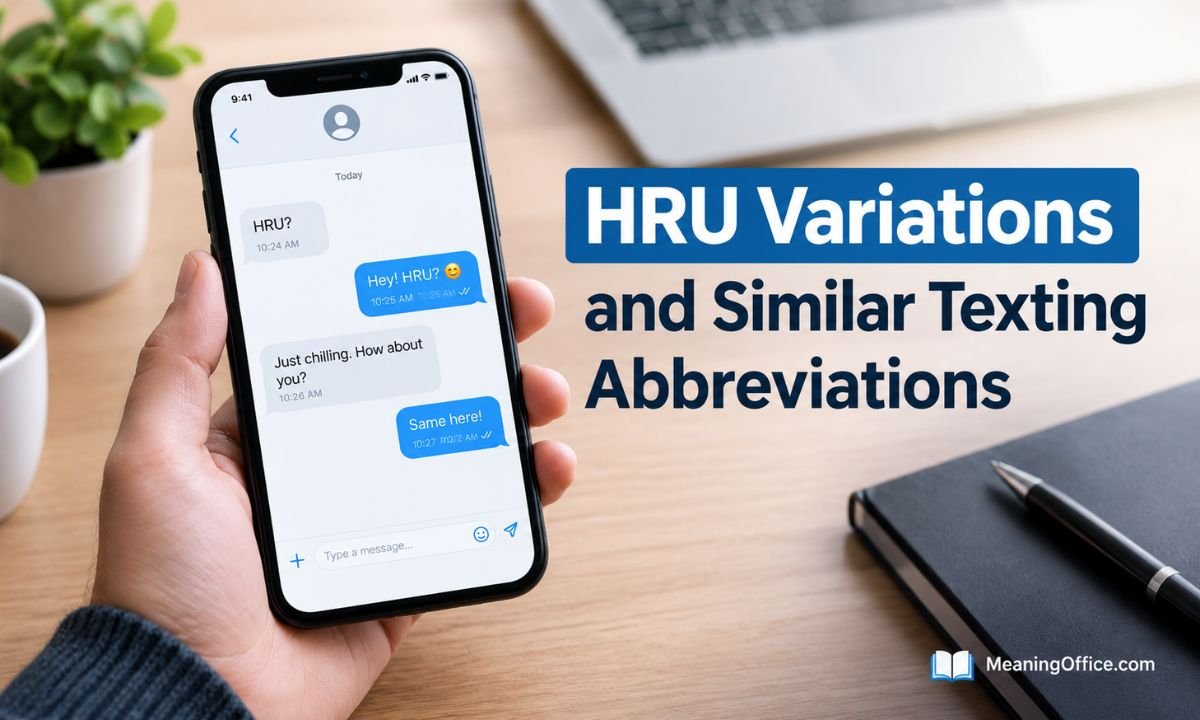
Common HRU Variations
- hru? and HRU? (same meaning)
- hru doing? (how are you doing?)
- hbu? (how about you?)
- hyd? (how you doing?)
Similar Texting Abbreviations
| Abbreviation | Meaning |
|---|---|
| WYD | What are you doing? |
| HBU | How about you? |
| WBU | What about you? |
| RUOK | Are you okay? |
| WDYM | What do you mean? |
| TTYL | Talk to you later |
When Should You Use HRU?
Good Situations to Use HRU
- Texting close friends or family
- Starting a casual chat
- Checking in after a long gap
- Replying in a fast-moving group chat
Situations Where You Should Avoid HRU
- Formal emails and work messages
- Messages to someone senior to you
- Sensitive moments, such as someone sharing bad news (use a fuller, warmer message instead)
Is HRU Still Used Today?
Yes. HRU remains widely used, especially among teens and young adults. It has held its place for years because it’s quick and easy to understand. Newer slang comes and goes, but basic greetings like this tend to stick.
Also read this Meaning:NTR Meaning: 7 Facts About Text, Anime & Slang
Frequently Asked Questions About HRU
What does HRU mean in texting?
HRU means “how are you?” It’s a quick, casual way to ask about someone’s well-being.
What does HRU stand for?
It stands for “how are you,” with “R” for “are” and “U” for “you.”
Is HRU rude?
No. It’s a friendly, casual greeting. It only seems abrupt if the context calls for more formality.
Is HRU formal or informal?
HRU is informal. Use it with people you know, not in professional settings.
How do I reply to HRU?
Answer honestly and briefly, such as “I’m good, you?” or “Doing okay, thanks for asking!”
Can HRU be used in professional messages?
It’s best avoided. Write “How are you?” in full for work or school messages.
Is HRU still popular?
Yes. It’s still common in texts, DMs, and chat apps today.
Does HRU mean anything else?
Outside texting, HRU can mean “hydrostatic release unit” (a life raft device) or “harm reduction unit.” In a chat, though, it almost always means “how are you?”
Final Thoughts on HRU Meaning
HRU is a simple, friendly shortcut for “how are you?” It’s quick to type, easy to understand, and perfect for casual chats with people you know. Keep it for relaxed conversations, use the full phrase in formal ones, and reply in whatever way feels honest.