


Have you seen the word “incognito” online or in a movie? It sounds fancy, but the meaning is simple. Incognito means hiding your name or identity. A person can go incognito so no one knows who they are.
You may also see this word in your web browser. Many people use it every day. In this post, we explain the meaning in easy English. You will also learn 5 common uses with simple examples.
Quick Answer: What Does Incognito Mean in Text?
In text, incognito means staying hidden, unnoticed, or anonymous. Someone who says “I’m going incognito” wants to keep a low profile.
Here is the short version:
- Meaning: with your identity hidden
- Part of speech: adjective or adverb (sometimes a noun)
- Tone: neutral, sometimes playful
- Common use: chats, social media, gaming, and private browsing
Dictionary.com defines it as having your identity concealed, often under an assumed name, to avoid notice.
Incognito Full Form and Definition
Incognito is not an acronym. It is a full English word, so it has no “full form” like LOL or BRB. In texts, some people shorten it to “incog,” which is just a casual short form.
Simple definition: acting, traveling, or appearing without people knowing who you really are.
What Does Incognito Stand For?
It does not stand for anything. The word comes from Latin. It joins “in,” meaning not, with “cognitus,” meaning known. So the root idea is “not known.”
Is Incognito Rude, Offensive, or Neutral?
Incognito is neutral. It is not rude or offensive.
It can feel a little secretive, though. If you say “I was incognito all day,” a friend may wonder why. Tone and context decide how it lands.
Incognito in a Sentence Meaning
Here are quick sentences that show the meaning:
- “The singer walked through the mall incognito.”
- “I stayed incognito in the group chat.”
- “He opened an incognito tab to book the surprise gift.”
In each one, someone is hiding an identity or an activity.
Where Is Incognito Commonly Used?
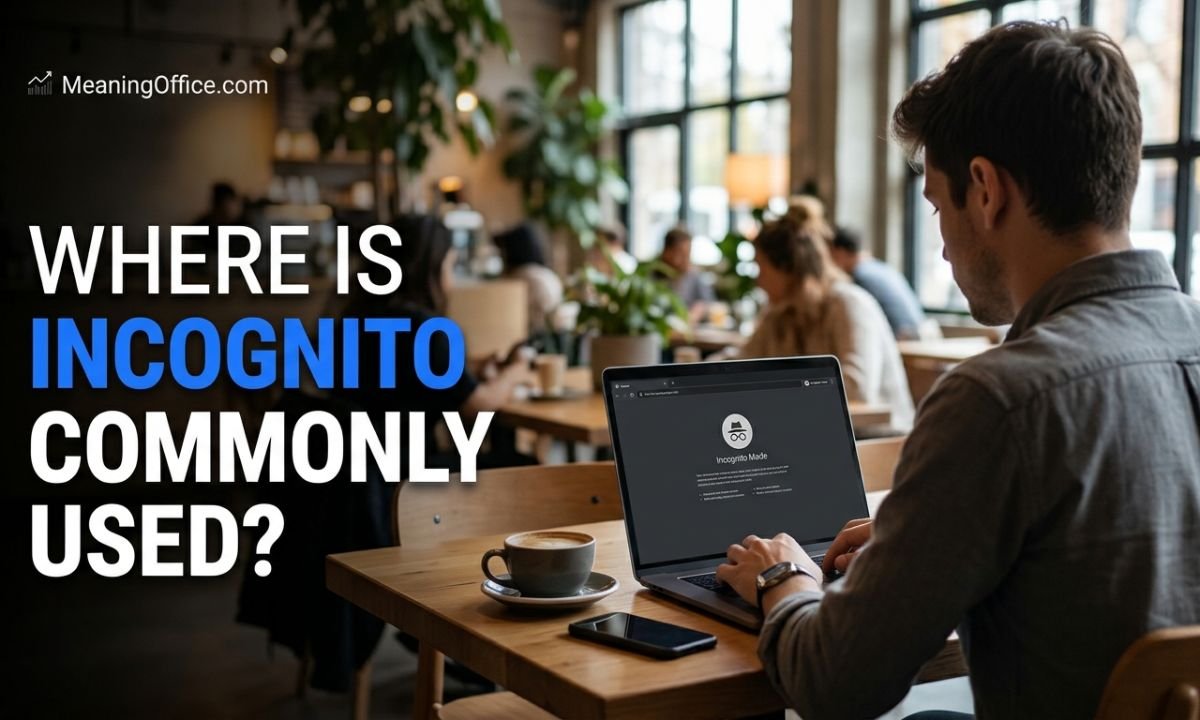
People use the word in many places. Here are the five most common.
1. Text Messages
In texts, incognito often means “I’m staying quiet or hidden for now.”
- “Going incognito this weekend, no social media.”
- “I’m incognito until the exam is over.”
2. Social Media
On social media, it usually means using a hidden or low-key presence. People might view stories without being noticed, use a private account, or stay off the feed.
- “Browsing your page incognito, don’t tell anyone.”
3. Online Gaming
Gamers use it for stealth. It can mean hiding a username, joining a lobby quietly, or playing without showing status.
- “Joined the lobby incognito so they wouldn’t spot me.”
4. Web Browsing
This is the most famous use. Incognito mode is a private browsing setting in browsers like Chrome. It does not save your local history or cookies after you close the window.
5. Everyday Conversation
In daily talk, it means keeping a low profile. Celebrities do it, and so do regular people.
Merriam-Webster even lists a slang sense of “incognito mode” for dressing in a way that hides your face, as celebrities do to avoid being recognized. It notes this is a humorous nod to Chrome’s private browsing feature.
Synonyms of Incognito
If you want a different word, try one of these:
| Synonym | Simple Meaning |
|---|---|
| Anonymous | Without a known name |
| Undercover | Hidden for a purpose |
| Disguised | Changed to look different |
| Unidentified | Not recognized |
| Under the radar | Not noticed |
| Low-key | Quiet and not showy |
| In disguise | Looking like someone else |
Dictionary.com lists “unidentified” and “undisclosed” as synonyms.
Real-Life Examples of Incognito in Text
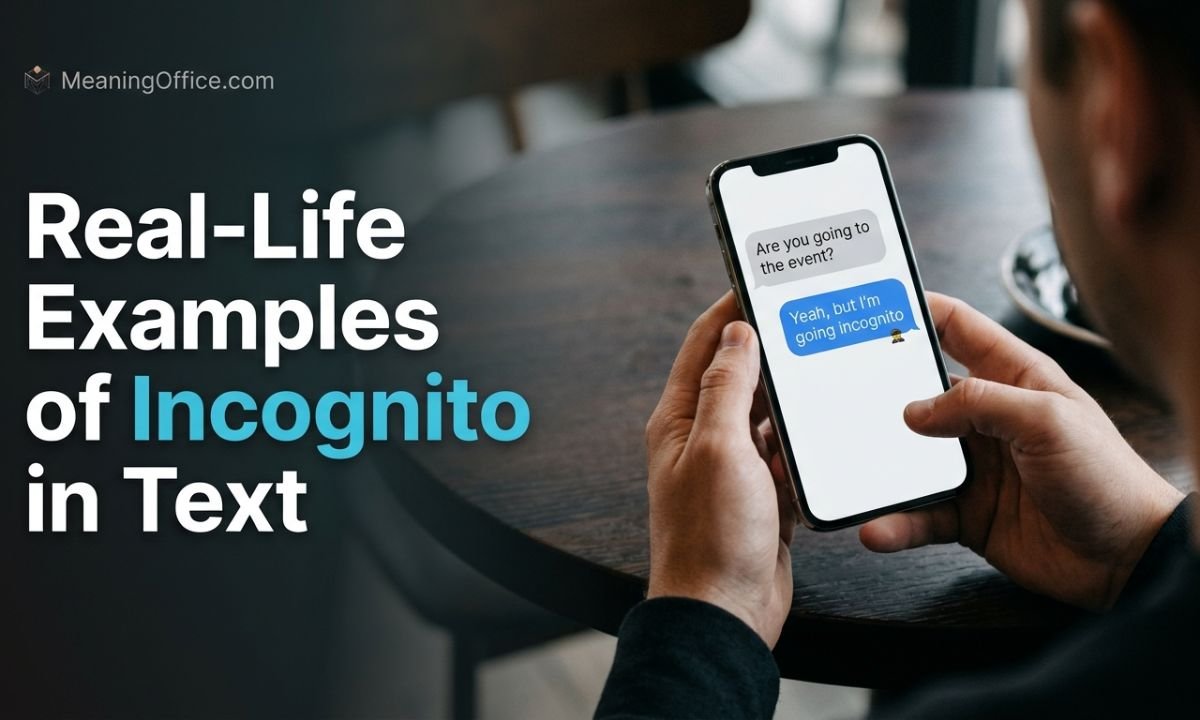
Tone changes everything. Here are examples by style.
Friendly Tone
- “I’m coming to your party incognito, don’t tell anyone!”
- “Went incognito at the reunion so I could surprise everyone.”
Casual Tone
- “Staying incognito today, I’m not in a talking mood.”
- “Just chilling incognito. Text you later.”
Funny Tone
- “Wore a hat and sunglasses to the grocery store. Full incognito mode.”
- “Me going incognito after sending that embarrassing text.”
Secretive Tone
- “Keep this incognito, okay? Nobody else knows.”
- “He’s been incognito since the argument.”
Gaming Context
- “Playing incognito tonight so I can avoid my friend list.”
- “Used an incognito name to test the new server.”
Social Media Context
- “Watched her story incognito. She’ll never know.”
- “Switched to incognito mode before searching for gift ideas.”
Playful Conversation
- “Are you incognito or just ignoring me?”
- “Detective mode on, incognito mode on.”
Origin and Background of Incognito

The word entered English from Italian, and Italian took it from Latin. The Latin parts are “in” (not) and “cognitus” (known).
For centuries, it described royals and famous people who traveled under a different name. A king might visit a city incognito to see how ordinary people lived.
Today the word has a second life online. Browsers made “incognito mode” famous, and now people use it as casual slang for hiding in general. Merriam-Webster dates the slang sense of “incognito mode” to 1987.
Incognito in a Sentence: More Examples
- “The manager checked the restaurant incognito.”
- “She traveled incognito to avoid fans.”
- “I read the comments incognito.”
- “He joined the call incognito, with his camera off.”
- “They decided to stay incognito until the news was official.”
Incognito Meaning in Farsi
In Farsi (Persian), “incognito” is most commonly translated as ناشناس (nāshenās), which means anonymous, unknown, or unrecognized. It describes a person who hides their identity or travels without being recognized. Another related phrase is در لباس مبدل (dar lebās-e mobaddal), meaning “in disguise.”
In the digital world, “incognito mode” is called حالت ناشناس (hālat-e nāshenās) or پنجره ناشناس (panjare-ye nāshenās). It refers to private browsing, where your browser does not save your history, cookies, or form data after you close the window.
Incognito vs Anonymous
These words are close, but they are not twins.
- Incognito means your identity is hidden, usually on purpose and for a while. People may know the real you exists.
- Anonymous means your name is not known at all. It can be permanent.
Example: A celebrity in a hat is incognito. A writer who never signs their name is anonymous.
Incognito vs Secret

- Incognito is about hiding who you are.
- Secret is about hiding information.
Example: “I’m going incognito” hides you. “It’s a secret” hides a fact.
Comparison Table
| Feature | Incognito | Anonymous | Secret |
|---|---|---|---|
| Main idea | Hidden identity | Unknown name | Hidden information |
| Time frame | Often temporary | Can be permanent | Varies |
| Focus | The person | The name | The fact |
| Typical tone | Neutral or playful | Neutral | Serious or playful |
| Example | “Traveling incognito” | “Anonymous tip” | “Keep it secret” |
When Should You Avoid Using Incognito?
The word is safe, but context matters. Skip it when:
- You are talking to a boss or client. It can sound odd or evasive in formal emails.
- Someone is upset. “I’m going incognito” can sound like you are shutting them out.
- Trust is at stake. In a relationship, hiding things can create doubt.
- The reader may not know the word. Younger kids or new English learners may not get it.
- You are hiding something harmful. Using it to cover bad behavior is never okay.
Polite and Simple Alternatives to Incognito
Not sure incognito fits? Try these instead:
- “I’m staying low-key.”
- “I’m keeping a low profile.”
- “I’m laying low for now.”
- “I’d rather stay private.”
- “I’m taking a quiet break.”
These work well in both casual and professional chats.
Incognito Mode (Browser Meaning)
Incognito mode is a private browsing setting. When you close the window, your browser does not keep the history, cookies, or form entries from that session.
Here is what it does and does not do:
| It Does | It Does Not |
|---|---|
| Skip saving local browsing history | Hide you from your internet provider |
| Delete cookies when you close the window | Hide you from your school or work network |
| Help with surprise gifts or shared devices | Make you anonymous to websites |
| Keep searches off the device history | Protect you from viruses |
Many people think it makes them invisible online. It does not. It only keeps your own device clean.
Why Do People Use Incognito in Text?
People use the word for a few easy reasons:
- Privacy: They want less attention.
- Humor: It is a funny way to say “I’m hiding.”
- Surprise: It protects a gift or a plan.
- Peace: They need a break from messages.
- Trend: Browser culture made the word popular.
It is short, clear, and everyone gets the idea fast.
Also read this Meaning:ORG Full Meaning Explained
The Impact of Using Incognito in Communication
The word can shape how people read you.
Positive effects:
- It shows you value privacy.
- It adds fun to a joke.
- It explains a quiet period without a long message.
Negative effects:
- It may sound secretive.
- Friends may feel shut out.
- It can cause “what are you hiding?” questions.
A short explanation helps. For example: “Going incognito for exams, back on Friday!” That removes any doubt.
Is Incognito Safe for Social Media?
Yes, the word itself is safe. You can use it in captions, comments, and DMs without trouble.
Be careful with the behavior behind it:
- Fake accounts that trick people can break platform rules.
- Hidden profiles used to bother others can get you banned.
- Lurking is fine, but do not use it to stalk someone.
Use incognito for privacy, not for harm.
More Texting Examples
Here are extra lines you can copy and adapt:
- “I’ll be incognito till Monday. Call if it’s urgent.”
- “Don’t tag me. I’m incognito this week.”
- “Opened the link in incognito, just in case.”
- “He’s incognito in the group chat again.”
- “Going incognito mode to finish my project.”
- “Is this your incognito account?”
- “Spotted my teacher at the mall. She was totally incognito.”
- “I’m incognito at the surprise party. Hide the cake!”
FAQs
What does incognito mean?
Incognito means hiding your real name or identity. A person goes incognito so others do not know who they are.
What does incognito mean in simple words?
It means “in secret” or “not known.” You act or travel without showing who you are.
What does incognito mode mean?
Incognito mode is a private browsing setting. Your browser does not save your history, cookies, or form data after you close it.
What does going incognito mean?
It means hiding your identity on purpose. A famous person may go incognito to avoid fans and cameras.
Is incognito mode really private?
Not fully. It only hides your history on your own device. Websites, your school, your work, and your internet provider can still see your activity.
What does incognito mean on Instagram?
It usually means you view posts or stories without being noticed. Some people use a private or anonymous viewer for this.
What does incognito mean in a text or chat?
It means the person is staying hidden or quiet. They may be online but do not want to be seen.
Conclusion
Now you know what incognito means. It means hiding your name or identity so others do not know who you are. People use it for travel, fame, privacy, and online browsing. The word may sound fancy, but the idea is easy.
Remember, incognito mode is not fully private. It only stops your device from saving your history. Websites and internet providers can still see what you do. Use it wisely, and share this post with a friend who wants to learn the word.
3 thoughts on “Incognito Meaning in English: 5 Easy Uses You’ll Love”