

You open a group chat and someone writes, “Where have you been? You’ve been MIA all week.” Or a friend texts, “Sorry, I was MIA yesterday.” It’s a tiny three-letter acronym, but it shows up everywhere, and the meaning shifts a little depending on who says it and how.
This guide breaks down the MIA meaning in text in plain language. You’ll get the full form, the slang use, real examples for every situation, a few tone tips, and some safer alternatives for work or formal chats.
Quick Answer: What Does MIA Mean in Text?
MIA means “missing in action.” In texting and on social media, it describes someone who is absent, silent, or hard to reach. For example, “I’ve been MIA lately” means “I haven’t been around or replying much.”
It’s casual, usually harmless, and borrowed from military language.
What Does MIA Mean in Text?
When someone uses MIA in a message, they’re talking about disappearing from a conversation, event, or online space. It doesn’t have to mean anything serious. A person can go MIA because they were busy, sick, asleep, or just tired of their phone.
The word can describe yourself (“I was MIA”) or someone else (“she’s been MIA”). It works as an adjective, and people also use it as a casual verb: “He went MIA after the party.”
MIA Full Form
The MIA full form is missing in action. Dictionaries trace the noun to the mid-1940s, and the phrase itself comes straight from wartime reporting.
What Does MIA Stand For?
“Missing in action” is the main answer, but the letters can point to other things depending on context:
| Meaning | Where You’ll See It |
|---|---|
| Missing in action | Texts, social media, everyday talk, military reports |
| Miami International Airport | Travel, flight tickets (airport code) |
| Made in America | Product labels, marketing |
| Mía / Mia | A name, or the Spanish word for “mine” |
| M.I.A. | The British rapper and several song titles |
If the sentence is about someone being quiet or gone, it’s almost always “missing in action.”
MIA Meaning as Slang
As slang, MIA is a lighthearted way to say someone has dropped off the radar. Think of it as the casual cousin of “I’ve been out of touch.” Because it’s short and a bit playful, it fits fast-moving chats where nobody wants to write a long apology.
You’ll often hear it paired with “lately,” “again,” or a time frame: MIA for a week, MIA since Monday, MIA again.
Is MIA Rude, Offensive, or Neutral?
MIA is neutral in most chats. Tone decides the rest.
- Friendly tone: “Hey stranger, you’ve been MIA!” feels warm.
- Joking tone: “Look who’s finally not MIA” feels teasing.
- Annoyed tone: “You’re always MIA when I need you” can sound like criticism.
The only real sensitivity is the original military meaning. For families who lost someone in war, MIA carries heavy weight. Using it casually among friends is normal, but it’s smart to avoid it in solemn or formal situations.
What Does M.I.A Mean in Slang Katseye?
If you saw “M.I.A.” in a K-pop or fan chat, check the context. Katseye has a track titled “M.I.A.” on its Beautiful Chaos release, so fans may be talking about the song rather than using slang. The slang meaning of the acronym doesn’t change: it’s still “missing in action.” The song title simply borrows the phrase.
Where Is MIA Commonly Used?
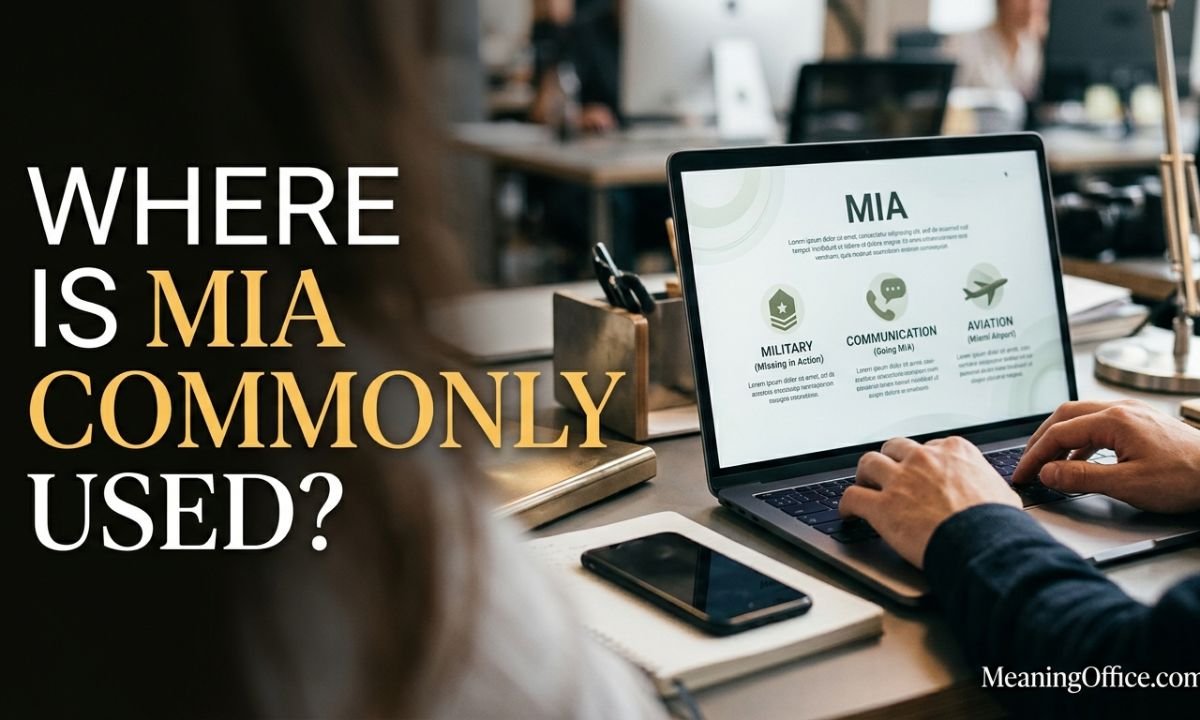
You’ll spot MIA in many places:
- Text messages and iMessage chats
- WhatsApp, Telegram, and Snapchat
- Instagram captions and comments
- TikTok comments and captions
- Facebook posts
- Discord servers and gaming lobbies
- Work chats like Slack or Teams (with care)
- Casual emails to colleagues you know well
It tends to show up where people write fast and expect others to get the shorthand.
Also read this Meaning:ORG Full Meaning Explained in Simple Words in 2026
Real-Life Examples of MIA in Text
Seeing the word in action makes the meaning click. Here are six everyday situations.
Friendly Example
Ayesha: Hey! Haven’t heard from you in ages. You’ve been MIA!
Sara: I know, I’m sorry. Exams ate my whole month. Let’s catch up this weekend?
Here MIA is a warm check-in. Ayesha isn’t angry. She misses her friend.
Casual Example
“Sorry I was MIA yesterday, my phone died and I didn’t notice until midnight.”
This is the most common use. It’s a quick apology without any drama.
Social Media Example
Caption: “Been MIA for a bit, but I’m back with something new 🎥”
Creators use MIA to explain a posting break. It tells followers, “I’m still here, I just paused.”
Group Chat Example
Zain: Is anyone going to help with the plan or are you all MIA?
Hamza: Here! Just got off work.
In groups, MIA often works as a gentle nudge to bring quiet people back.
Gaming Example
“Our healer went MIA right before the boss fight. We wiped twice.”
In gaming, MIA means a teammate vanished mid-match or didn’t show up. It can be playful or frustrated.
Argumentative Example
“You’re MIA every time something important comes up. I’m tired of chasing you.”
The tone changes everything here. MIA becomes a complaint about reliability, and it can sting. If you’re in this spot, a direct conversation works better than a one-word label.
MIA Meaning in Relationship
In dating, MIA usually means a partner or crush has gone quiet. It can be innocent, like a busy week, or a worry sign if it keeps happening. We’ll cover that more in the context section below.
MIA in Different Contexts
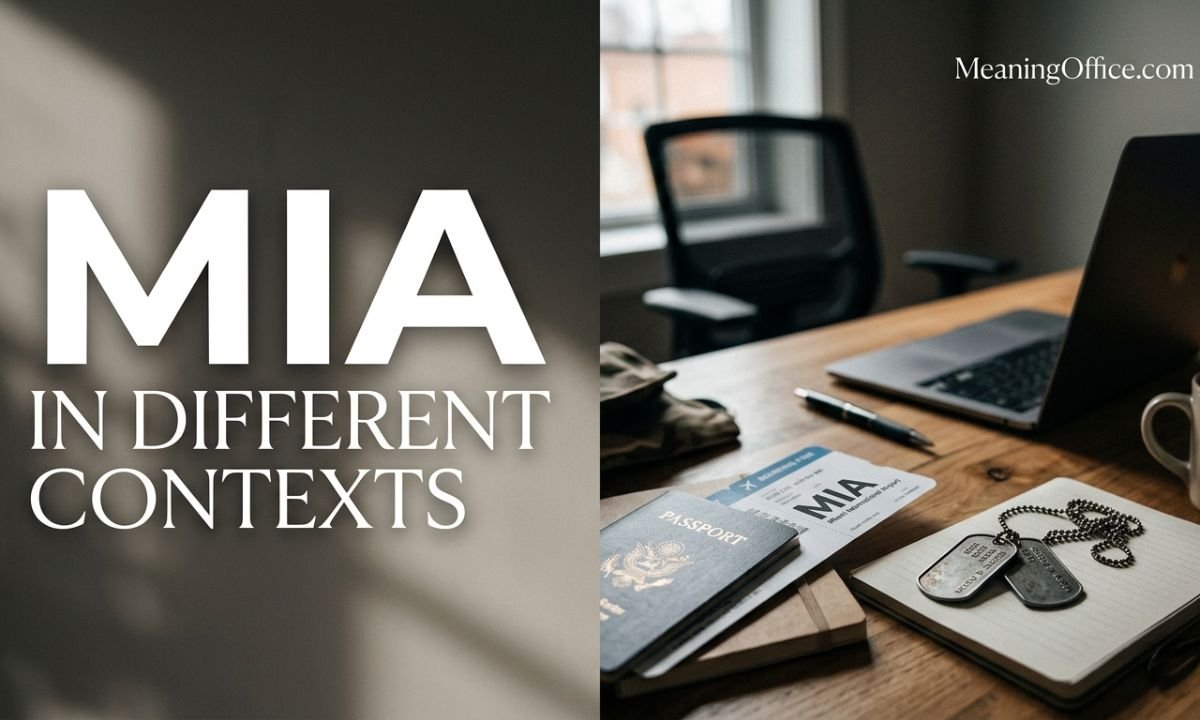
The same three letters carry slightly different feelings depending on the setting.
MIA Between Friends
Friends use MIA the most, and mostly with a smile. It’s often an invitation: “We miss you, come back to the chat.” Nobody expects a formal explanation.
MIA in Relationships
In a relationship or early dating stage, being MIA can feel more personal. A partner saying “you’ve been MIA” may mean they feel ignored or unsure where they stand.
Healthy ways to handle it:
- Name the feeling without blaming (“I’ve missed hearing from you”).
- Ask what’s going on rather than assuming the worst.
- Share your own availability so expectations are clear.
If someone disappears repeatedly with no explanation, that’s less about MIA and more about communication habits worth discussing.
MIA at Work
At work, “MIA” can appear in casual team chats: “Our designer’s been MIA on the thread.” It’s understood, but it can sound like a complaint about someone’s responsibility. In emails to clients or managers, a clearer phrase is better (see the alternatives below).
MIA in Gaming
Gamers use MIA for teammates who leave, go AFK, or don’t join the lobby. It’s fast shorthand when the match is moving and typing long sentences isn’t an option.
MIA on Social Media
On platforms like TikTok and Instagram, MIA often means someone took a posting break or went quiet online. If a comment says “you went MIA on me,” it usually means the person felt ignored or missed the creator’s content.
Origin and Background of MIA
MIA began as official military terminology. Armed forces used “missing in action” for service members whose whereabouts were unknown after a battle. They might have been captured, wounded, or killed, but their fate hadn’t been confirmed. Dictionaries record early use of the noun in 1944.
Over decades, the phrase slipped into everyday English. By the time texting took off, people were using it to mean “gone from the conversation” rather than “lost in war.” That’s a common pattern with slang: a serious phrase gets lighter as more people use it casually.
MIA vs. AFK vs. Ghosting
These three get mixed up all the time. Here’s the quick difference.
| Term | Meaning | Duration | Tone |
|---|---|---|---|
| MIA | Absent, out of touch, or not around | Hours to weeks | Neutral to playful |
| AFK | “Away from keyboard,” briefly stepping away | Minutes to an hour | Neutral, practical |
| Ghosting | Deliberately cutting off contact without explanation | Often permanent | Negative |
MIA vs. AFK
AFK is short and temporary. You say “brb, AFK” before grabbing a snack. MIA is bigger. It describes a longer stretch of absence, and it often gets used after the fact.
MIA vs. Ghosting
Ghosting is a choice to stop replying, usually in dating or friendships. MIA doesn’t assume intent. Someone can be MIA because they were sick, overwhelmed, or offline. Ghosting almost always feels personal; MIA often doesn’t.
When Should You Avoid Using MIA?
Skip MIA when the situation calls for care or formality:
- Formal emails to clients, professors, or executives
- Serious emergencies when someone is truly missing or unreachable
- Conversations with military families or veterans who may find the casual use insensitive
- Sensitive conflicts where a label could feel like blame
- International audiences who may not know the slang
If you’re really worried about someone’s safety, say so directly. “I haven’t heard from you and I’m worried” is clearer and kinder than any slang.
Polite Alternatives to MIA
Casual Alternatives
- “I’ve been off the grid.”
- “I’ve been out of touch.”
- “I disappeared for a bit.”
- “I went quiet.”
- “I’ve been swamped.”
Professional Alternatives
- “I apologize for the delayed response.”
- “I was unavailable for the past few days.”
- “Thank you for your patience while I was out of office.”
- “I’m following up as I haven’t heard back.”
- “I’ve been away from my inbox and am catching up now.”
Why Do People Use MIA in Texting?
A few simple reasons keep it popular:
- It’s fast. Three letters replace a long sentence.
- It softens awkwardness. “I was MIA” sounds lighter than “I ignored your messages.”
- It’s widely understood. Most English speakers recognize it right away.
- It’s a little funny. The military roots give it a dramatic edge, which makes it playful.
- It fits online culture. Short, expressive slang spreads quickly across apps.
The Impact of MIA on Communication
Used well, MIA keeps conversations light and honest. It lets people acknowledge a gap without a big apology.
Used carelessly, it can backfire. Repeatedly telling someone they’re MIA may feel like pressure. And if you’re always the one who goes MIA, friends and colleagues can start to feel unimportant, even if you never meant that.
A good rule: if you disappear, say why, even briefly. A short “busy week, back soon” prevents most misunderstandings.
Is MIA Safe for Social Media?
Yes. MIA is safe for Instagram, TikTok, Facebook, X, Snapchat, and Discord. It isn’t offensive or restricted, and it won’t trigger moderation. Just keep the context in mind. Posting “MIA” about a real missing-person case would be inappropriate and could confuse readers.
MIA Examples by Tone
Here are quick lines you can adapt, grouped by the feeling behind them.
Friendly
“Hey stranger, you’ve been MIA! Everything okay?”
Casual
“Sorry I’ve been MIA, work has been nuts.”
Playful
“Oh look, the MIA legend returns!”
Concerned
“You’ve been MIA for days. Just checking you’re alright.”
Argumentative
“You go MIA every time we need a decision.”
Gaming
“Where’s our tank? He’s MIA again.”
Social Media
“MIA from posting, but I’m back this week.”
Common Misunderstandings About MIA
“MIA always means something serious.” It doesn’t. In texting it’s usually light.
“MIA means someone is ignoring you.” Not necessarily. They could just be busy or offline.
“MIA and ghosting are the same.” They’re different. Ghosting is deliberate; MIA isn’t always.
What Does MIA Mean on TikTok?
On TikTok, MIA means someone has been inactive, not posting, or not replying. A creator might say “I was MIA” to explain a break, while a commenter might say “you went MIA” to say they missed your videos.
Mia vs. MIA vs. Mía (Spanish)
Capitalization and accent marks matter. “Mia” can be a given name. In Spanish, “mía” (with an accent) means “mine” when referring to something feminine, like “La casa es mía,” or “The house is mine.” Only the all-caps “MIA” in an English chat means “missing in action.”
Also read this Meaning:Gyatt Meaning
How to Respond When Someone Says “You’re MIA”
Your reply depends on who’s asking and why. These simple steps work almost every time.
- Acknowledge it. A quick “yeah, I know” shows you noticed.
- Give a short reason. “Work got crazy” or “I needed a break from my phone” is enough.
- Reassure them. “Nothing to do with you” prevents hurt feelings.
- Suggest a catch-up. “Call this weekend?” turns an awkward moment into a plan.
Sample replies:
- To a friend: “Ha, guilty. Life got busy but I’m back!”
- To a partner: “I’m sorry I went quiet. I should’ve told you I was swamped. Can we talk tonight?”
- To a colleague: “Apologies for the silence. I was handling a deadline. Here’s the update.”
- To a group: “I’m here! Catching up on messages now.”
FAQs
What does MIA mean in text?
MIA means “missing in action” and describes someone who is absent, quiet, or unreachable in a chat.
What is the full form of MIA?
The full form is “missing in action.”
Is MIA a rude word?
No. It’s neutral, but the tone can turn critical if you say it in an annoyed way.
What does MIA mean on TikTok?
On TikTok, it means someone is inactive, not posting, or not replying.
What does MIA mean in a relationship?
It usually means a partner or crush has gone quiet, though the reason may be innocent.
Is MIA the same as ghosting?
No. Ghosting is a deliberate choice to cut contact, while MIA is simply being absent for any reason.
What does Mia mean in Spanish?
“Mía” means “mine” (feminine) in Spanish, which is unrelated to the English slang.
Can I use MIA in a work email?
It’s best to avoid it in formal emails and use “unavailable” or “out of office” instead.
What does M.I.A mean in slang for Katseye fans?
It may refer to the group’s song titled “M.I.A.,” while the slang meaning stays “missing in action.”
How do I reply if someone says I’m MIA?
Acknowledge it, share a short reason, and offer to catch up.
Conclusion
The MIA meaning in text is simple once you see it: someone has gone quiet or absent, and “missing in action” is the shorthand. It started as serious military language and softened into a casual, everyday phrase for friends, creators, gamers, and coworkers.
Use it with a warm tone, skip it in formal or sensitive moments, and give a short reason whenever you disappear yourself. Do that, and this tiny acronym keeps your chats clear, friendly, and human.
2 thoughts on “MIA Meaning in Text Explained: 5 Powerful Examples”