

You see “uncured” on bacon, ham, and hot dogs and assume it means a cleaner, healthier product. It’s more complicated than that. The label tells you how the meat was preserved, not whether it’s free of nitrates. This guide explains the real uncured meat meaning, what the label hides, and how to shop smarter.
Quick Answer: What Does Uncured Meat Mean?
Uncured meat is meat preserved without added synthetic sodium nitrite or sodium nitrate. Makers use natural sources instead, usually celery powder, celery juice, or beet extract. These contain natural nitrates that work much like the synthetic kind.
So “uncured” describes the curing ingredient, not the absence of curing.
Uncured Meat Full Form and Definition
“Uncured meat” has no full form. It isn’t an acronym or text slang. It’s a food-labeling term.
Definition: A processed meat product, such as bacon, ham, sausage, or deli slices, that is preserved with plant-based nitrate sources instead of lab-made sodium nitrite.
What Does Uncured Meat Stand For?
It stands for a labeling category. It signals “no synthetic curing agents added.” It does not stand for “raw,” “natural,” or “nitrate-free.”
Is Uncured Meat the Same as Raw Meat?
No. Raw meat is fresh and unprocessed. Uncured meat has still been seasoned, preserved, and often smoked or cooked.
Is Uncured Meat Healthier?
Not necessarily. Studies of deli meats have found that “uncured” products can contain nitrate and nitrite levels close to those in traditionally cured products. The label may sound healthier, but the nutrition panel and ingredient list matter more. More on this below.
See also:MIA Meaning in Text: 5 Examples & Mistakes to Avoid
Does Uncured Meat Contain Nitrates or Nitrites?
Yes. Celery and beet extracts are naturally rich in nitrates. During processing, bacteria convert them into nitrites, which then do the preserving. The final product contains nitrites either way.
Why Does Uncured Meat Look Like Cured Meat?
Nitrites keep meat pink or red and give it that familiar cured taste. Since uncured products use nitrite from plants, the color and flavor come out nearly the same. Without any nitrite source, ham would turn gray and taste more like plain roast pork.
Cured Meat vs. Uncured Meat
| Feature | Cured Meat | Uncured Meat |
|---|---|---|
| Curing agent | Sodium nitrite or nitrate | Celery powder, beet, or similar |
| Source | Synthetic | Plant-based |
| Typical label | Lists “sodium nitrite” | “Uncured” or “no nitrates added*” |
| Nitrite in final product | Yes | Yes (often similar) |
| Color and taste | Pink, salty, savory | Very similar |
| Price | Usually lower | Usually higher |
*Look for the fine print. It usually adds “except those naturally occurring in celery powder.”
Is Uncured Meat Cooked?
It depends on the product. Uncured deli ham and hot dogs are typically fully cooked. Uncured bacon is usually raw, so cook it thoroughly. Always check the package.
Uncured Meat Meaning Slang: Is It Slang?
No. People sometimes search for it that way, but “uncured” is a food industry and labeling term. It has no texting or social media meaning.
Where Is the Term Uncured Meat Commonly Used?
- Grocery store packaging and deli counters
- Organic and “natural” food brands
- Health blogs and diet forums
- Recipe sites that cover bacon, ham, and sausage
- Consumer reports on food labeling
Why Do Companies Use the Term “Uncured”?
There are two main reasons.
- Regulation. For years, U.S. rules required meat made with natural nitrate sources to carry the “uncured” label.
- Marketing. Shoppers see “uncured” or “no nitrates added” and assume the product is cleaner. That perception sells.
Real-Life Examples of Uncured Meat
Example 1: Uncured Bacon
A pack of bacon reads “Uncured. No nitrates or nitrites added except those naturally occurring in celery powder.” It’s the most common example you’ll find.
Example 2: Uncured Hot Dogs
Many “natural” hot dog brands use cultured celery extract. The dog tastes like a regular frank, with a similar nitrite profile.
Example 3: Grocery Shopping
You’re choosing between two packs of turkey slices. One says “uncured” and costs more. After checking the ingredients, you find both use a nitrite source. You may be paying extra for the label alone.
What Ingredients Can Appear in Uncured Meat?
Look for these on the ingredient list:
- Celery powder or celery juice
- Cultured celery extract
- Beet powder or beet juice
- Sea salt
- Cherry powder
- Sugar or cane sugar
- Spices and smoke flavor
Any of the celery or beet items signals a natural nitrate source.
Is Uncured Meat Safe to Eat?
Yes. It’s inspected and regulated like any other processed meat. The real question is how much you eat, since processed meats are high in sodium and linked to health risks when eaten often.
When Should You Be Careful With the Term?
Be cautious when:
- You’re avoiding nitrates for a medical reason
- You’re feeding a lot of processed meat to kids
- The package makes health claims but skips the ingredient details
- The price is much higher with no clear benefit
What Is the Difference Between “Uncured” and “No Nitrates Added”?
They often appear together, but they aren’t identical.
| Term | What It Means |
|---|---|
| Uncured | No synthetic curing agents were added |
| No nitrates or nitrites added | None added directly, but natural sources may be used |
| Nitrate-free | Rarely accurate for processed meat |
The asterisk is the giveaway. If the fine print mentions celery powder, nitrates are still present.
Uncured Meat vs. Fresh Meat
| Feature | Uncured Meat | Fresh Meat |
|---|---|---|
| Processing | Preserved and seasoned | Minimal |
| Shelf life | Longer | Short |
| Nitrites | Yes, from plant sources | No |
| Salt content | Usually high | Low |
| Examples | Bacon, ham, hot dogs | Chicken breast, steak, ground beef |
For everyday meals, fresh meat is the cleaner option.
Why People Choose Uncured Meat
Here are the 5 perks that draw shoppers in:
- No synthetic additives. Many people prefer plant-derived ingredients.
- Simpler ingredient lists. Brands that go uncured often avoid other artificial extras too.
- Familiar taste and color. You get the classic bacon or ham experience.
- Often paired with better sourcing. Many uncured brands also advertise no antibiotics or humane raising.
- Peace of mind. Some buyers simply feel better choosing a “natural” product.
And the 3 bad facts to keep in mind:
- Nitrates are still there. Natural sources can deliver levels similar to synthetic curing.
- It’s still processed meat. Health authorities, including the World Health Organization’s cancer agency, classify processed meat as a cancer risk when eaten regularly.
- The label can mislead. “Uncured” may give a false sense of safety, and you often pay more for it.
How to Read an Uncured Meat Label
Follow these steps at the store:
- Read the front claim. “Uncured” tells you the curing agent isn’t synthetic.
- Find the fine print. Look for an asterisk or the phrase “except those naturally occurring.”
- Scan the ingredients. Check for celery powder, beet juice, or cultured celery.
- Check sodium. Processed meats run high in salt.
- Compare with the cured version. If the numbers match, the premium may not be worth it.
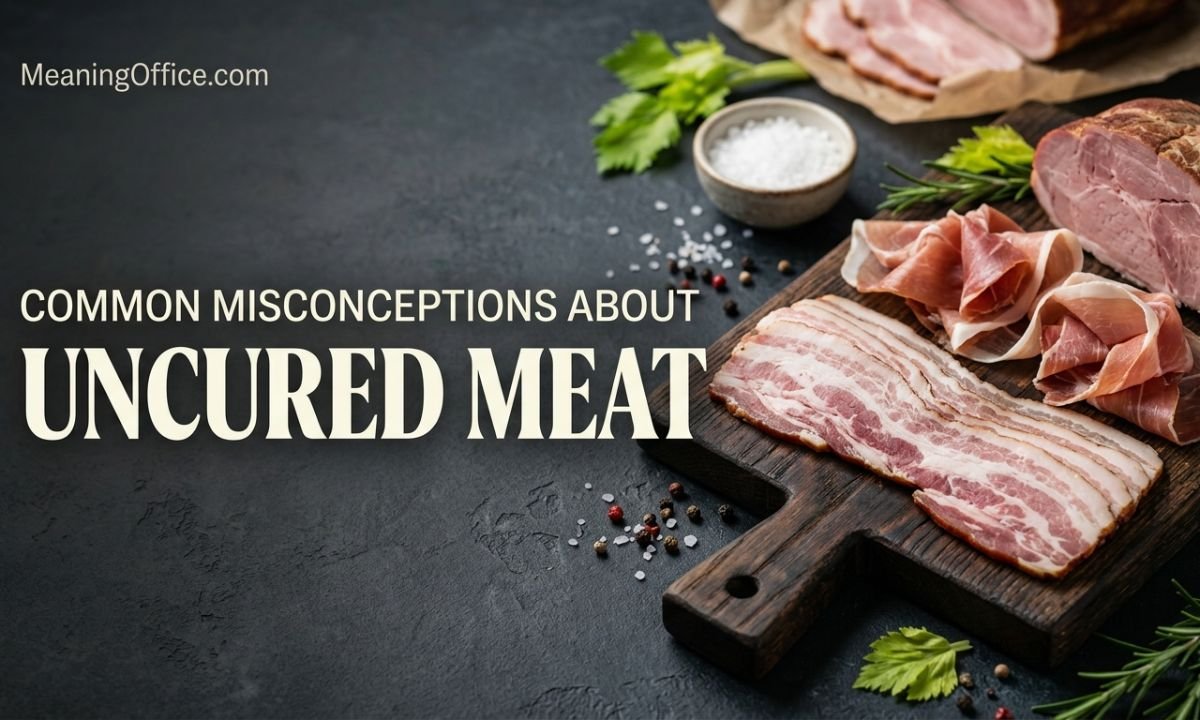
Common Misconceptions About Uncured Meat
Misconception 1: Uncured Means Completely Untreated
False. The meat is still seasoned, salted, and often smoked.
Misconception 2: Uncured Means Zero Nitrates
False. Plant sources add natural nitrates, which convert to nitrites.
Misconception 3: Uncured Always Means Healthier
Not true. The nutritional gap between cured and uncured can be small, and both can be high in sodium and saturated fat.
Misconception 4: Uncured Means Raw
Wrong. Many uncured products, like deli ham and hot dogs, are fully cooked and ready to eat.
Misconception 5: Uncured Meat Always Tastes Different
Usually not. Most people can’t tell the difference in a blind taste test, since nitrite drives the classic cured flavor in both.
See also:YKY Meaning in Text: 7 Good Uses & 3 Bad Mistakes
FAQs
What does uncured meat mean?
It means the meat was preserved with natural sources like celery powder instead of synthetic sodium nitrite.
Is uncured meat the same as raw meat?
No. Uncured meat is processed and seasoned, and may be fully cooked.
Is uncured meat safe to eat?
Yes, as long as it’s stored, handled, and cooked properly.
Is uncured meat healthier than cured?
Not by much. Nitrate levels are often similar, and both are processed meats.
Is uncured meat cooked?
It varies. Deli meats and hot dogs usually are, while uncured bacon is typically raw.
Does uncured meat contain nitrates or nitrites?
Yes. They come from natural sources like celery and beet.
Why does uncured meat look like cured meat?
Nitrites from plant sources produce the same pink color and savory taste.
Is “uncured” a slang term?
No. It’s a food-labeling term with no slang meaning.
What is the difference between uncured and no nitrates added?
“Uncured” refers to the lack of synthetic curing agents. “No nitrates added” refers to direct additions only, so natural sources may still be present.
Is uncured meat worth the extra cost?
Only if you value plant-based ingredients or the brand’s sourcing. Don’t pay extra expecting fewer nitrates.
Final Thought
The uncured meat meaning comes down to one point: the curing agent changed, not the curing process. You still get nitrites, salt, and processed-meat trade-offs. Read the ingredient list, ignore the front-of-pack hype, and enjoy bacon or ham in moderation. If you’re after the healthiest choice, fresh meat will always beat any processed option, cured or not.
1 thought on “Uncured Meat Meaning: 5 Perks & 3 Bad Facts”