

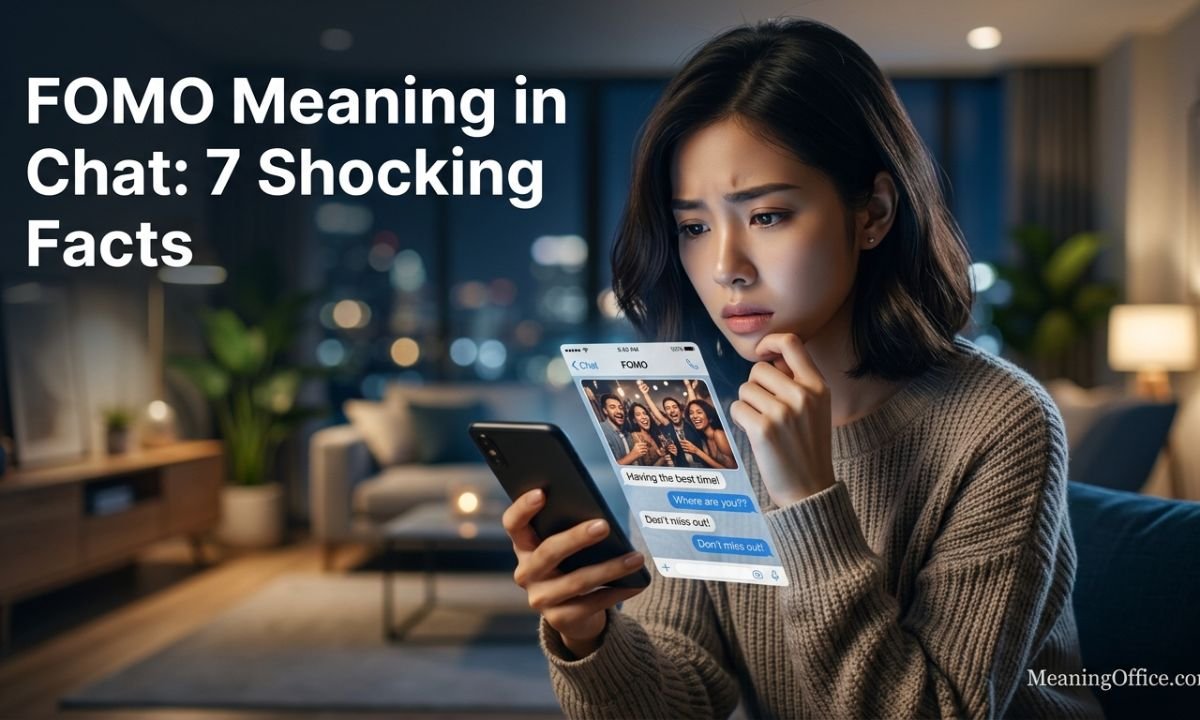
FOMO is a common slang term you may see in chats, texts, and social media. It means “Fear of Missing Out.” People use it when they feel worried about missing something fun, important, or exciting.
In online conversations, FOMO can describe many everyday feelings. Someone may use it when friends are hanging out without them or when they see an interesting event online. In this article, we’ll explore 7 surprising facts about FOMO and how people use it in chat.
What Does FOMO Mean in Chat?
FOMO means “fear of missing out.” In chat, people use it to say they feel left out, or worried they are missing something fun, important, or exciting.
Simple Definition:
FOMO in chat = the anxious feeling that others are enjoying something without you, usually after seeing messages, photos, or plans online.
You will see it typed in full caps, in lowercase, or as “fomo.” It works as a noun (“I have so much FOMO”) and sometimes as an adjective (“that was a total FOMO moment”).
Why FOMO Matters in Modern Communication
Chat apps are always on. Friends share plans, memes, and updates in real time. That speed is great for staying close, but it also shows you everything you are not part of.
Understanding FOMO helps you read tone correctly. It also helps you notice when a normal feeling is becoming an unhealthy habit.
Origins of FOMO
The phrase is an acronym built from fear of missing out. Dictionary records place its first use in the early 2000s, and people commonly credit venture capitalist Patrick McGinnis with popularizing it in a 2004 business-school magazine piece.
The idea only exploded once social platforms arrived. Endless feeds of other people’s best moments gave the feeling a daily trigger. By 2013, it had earned a place in the Oxford English Dictionary, which shows how mainstream it became.
How FOMO Is Used in Chat (With Examples)
People use the word in a few clear ways.
1. Expressing Regret
You missed an event and feel bad about it.
- “Saw the concert videos. Major FOMO right now.”
- “I skipped the trip and now I have FOMO.”
2. Wanting to Join In
You want an invitation or a way in.
- “You guys are at the cafe? FOMO, wait for me!”
- “Okay, this plan sounds fun. Don’t make me FOMO.”
3. Reaction to Updates
Someone shares news, and you respond with envy or excitement.
- “Your holiday pics are giving me serious FOMO.”
- “That new launch is pure FOMO for me.”
Also read this Meaning:DTF Meaning in Text: 7 Risky Facts
Common Situations Where FOMO Happens in Chat
1. Group Chats
A busy group chat is the classic trigger. Inside jokes, quick plans, and private references make you feel behind if you are not reading in real time.
2. Social Media Integration
Many chat apps now show stories, status updates, and shared posts. You can see where your friends are and what they are doing, even when no one invited you.
3. Fast Conversations
When messages fly by, catching up feels like homework. Missing the flow can feel like missing the friendship itself.
4. Exclusive Discussions
Private groups, close-friends lists, and “side chats” can make outsiders feel shut out, even when no one meant it that way.
Psychological Impact of FOMO in Chat
Occasional FOMO is normal. Constant FOMO can wear you down.
Emotional Effects:
- Anxiety and restlessness
- Low self-esteem
- Jealousy or sadness
- Feeling lonely, even in a crowd
Behavioral Effects:
- Checking your phone again and again
- Replying instantly, even when tired
- Saying yes to plans you do not want
- Losing sleep to stay online
- Trouble focusing on work or study
FOMO vs. JOMO: Understanding the Difference
| Feature | FOMO | JOMO |
|---|---|---|
| Full form | Fear of Missing Out | Joy of Missing Out |
| Core feeling | Anxiety, comparison | Calm, contentment |
| Phone habit | Constant checking | Intentional, limited use |
| Focus | What others are doing | What you are doing |
| Effect on mood | Stress, restlessness | Peace, balance |
What is JOMO?
JOMO means “joy of missing out.” It is the relaxed feeling of skipping something on purpose and being happy about it. You stay home, switch off notifications, and enjoy your own time without guilt.
Why FOMO Is So Common in Chatting
1. Instant Communication
Real-time messaging creates pressure to respond now. Delay feels like absence.
2. Social Comparison
People tend to share highlights, not ordinary days. Comparing your normal life to their best moments is a losing game.
3. Fear of Exclusion
Humans are social by nature. Feeling left out can trigger the same discomfort as real rejection.
4. Notification Culture
Pings, badges, and “typing…” bubbles keep pulling your attention back. Each alert quietly suggests that something important is happening without you.
Signs You’re Experiencing FOMO in Chat
Ask yourself if any of these sound familiar:
- You check chats first thing in the morning and last thing at night.
- You feel uneasy when your phone is out of reach.
- You scroll old messages just to “catch up.”
- You join conversations you do not care about.
- You feel upset when friends post plans you were not part of.
- You compare your social life to others often.
If you nodded at three or more, FOMO may be shaping your habits.
How to Deal with FOMO in Chat

1. Limit Notifications
Mute noisy groups and turn off non-essential alerts. Keep notifications only for people and chats that truly matter.
2. Focus on Real-Life Moments
Put the phone down during meals, walks, and conversations. Being present beats being updated.
3. Avoid Overthinking
A friend not tagging you usually means nothing. Most “exclusions” are accidents, not statements about you.
4. Practice Digital Detox
Pick a daily window, even 30 minutes, with no chat apps. Extend it to a full evening or weekend as you get comfortable.
5. Embrace JOMO
Treat a quiet night as a choice, not a loss. Read, cook, rest, or call someone one-on-one.
FOMO in Chat vs. Social Media FOMO
| Point | Chat FOMO | Social Media FOMO |
|---|---|---|
| Trigger | Messages, plans, group talk | Posts, stories, reels |
| Pace | Fast, real-time | Scrolling, passive |
| Main worry | Missing the conversation | Missing the lifestyle |
| Social pressure | Pressure to reply quickly | Pressure to look successful |
| Feels like | “I’m out of the loop” | “Their life is better” |
Common Misconceptions About FOMO in Chat
1. “Everyone Experiences FOMO Equally”
Not true. Personality, age, and how much time you spend online all change how strongly it hits.
2. “FOMO Means You’re Weak”
FOMO is a human reaction to social connection, not a flaw. Wanting to belong is normal.
3. “You Must Always Stay Connected”
Nobody needs to read every message. Healthy communication includes breaks.
Related Slang Terms You Should Know
- JOMO: Joy of missing out.
- FOBO: Fear of better options, the worry that something better might come along.
- YOLO: You only live once, often used to justify jumping in.
- Ghosting: Suddenly stopping all contact.
- Left on read: Seeing a message but not replying.
- IRL: In real life.
Real-Life Example of FOMO in Chat
Sara steps away for a family dinner. When she returns, her friends’ group chat shows photos from an impromptu beach trip. Everyone is tagging each other and replying with laughing emojis.
She types: “Wow, you all went without me? Huge FOMO.”
Her friend answers: “It was last-minute! Next time, we’ll call you first.”
Sara feels better right away. Saying “FOMO” out loud turned a hidden worry into an honest, friendly moment.
How FOMO Affects Different Age Groups
Teenagers
Teens often feel it most. Friendships and group acceptance matter a lot at this age, and chats can feel like the center of their social world.
Young Adults
College and early career years bring comparison about jobs, travel, and relationships. Chats and stories keep those comparisons constant.
Adults
Adults feel FOMO about career wins, parties, and family milestones. Work chats can add pressure to be available at all hours.
Tips to Use FOMO Positively

Turn FOMO into Motivation
If a friend’s trip makes you jealous, ask what it shows you want. Then plan something similar. FOMO can point to your real interests.
Stay Connected Mindfully
Choose quality over quantity. Reply when you have time, join plans you truly want, and say no without guilt.
Also read this Meaning:Talking Stage Meaning: 7 Amazing Facts
Frequently Asked Questions (FAQs)
What does FOMO mean in chat?
It means “fear of missing out,” the feeling that others are enjoying something without you.
Is FOMO a real psychological condition?
No, it is not a formal diagnosis. It is a common emotional response that researchers study.
How do you reply when someone says they have FOMO?
Reassure them and invite them in, for example: “Next time you’re coming with us!”
What is the difference between FOMO and JOMO?
FOMO is anxiety about missing out. JOMO is the calm joy of choosing to miss out.
Why do group chats cause FOMO?
They move fast and show shared plans and jokes, which can make absent members feel left behind.
Can FOMO affect mental health?
Yes, frequent FOMO can add to stress, poor sleep, and low mood.
How can I stop feeling FOMO in chats?
Mute busy groups, set phone-free time, and focus on activities you enjoy.
Is FOMO only for young people?
No, people of all ages feel it, though teens and young adults report it most.
Final Thought
The FOMO meaning in chat is simple: it is the worry that life is happening somewhere you are not. Chat apps make that worry louder, but you can turn it down. Mute what drains you, show up for what matters, and let some messages stay unread. Missing out is not always a loss. Sometimes it is the best choice you make all day.
1 thought on “FOMO Meaning in Chat: 7 Shocking Facts”