

Have you ever heard someone say, “I plead the Fifth”? It sounds serious, like something from a courtroom drama. But people use it in daily life too. Friends say it in chats, texts, and even at the dinner table. It is a quick way to say, “I won’t answer that.”
In this article, you will learn what “Plead the Fifth” really means. We will look at where it came from and how people use it today. You will also see 7 powerful examples to help you use it with ease. Let’s get started
Quick Answer: What Does Plead the Fifth Mean in Text?
To plead the Fifth means to refuse to answer a question because your answer might get you in trouble.
In a text or chat, it is usually a joke. It tells the other person, “I’m not answering that, and you can guess why.”
- Legal meaning: using your Fifth Amendment right to avoid self-incrimination.
- Slang meaning: playfully dodging a question that could embarrass you.
- Also said as: “take the Fifth,” “plead the 5th,” or “I’m taking the Fifth.”
Plead the Fifth Full Form and Definition
“Plead the Fifth” is not a text abbreviation. It is a short form of “plead the Fifth Amendment.”
The Fifth Amendment is part of the U.S. Constitution. It protects people from being forced to give evidence against themselves in a criminal case.
Simple definition: declining to answer because the answer could hurt you.
What Does Plead the Fifth Stand For?
The word “Fifth” stands for the Fifth Amendment. That is the fifth item in the Bill of Rights, the first ten amendments to the Constitution.
The word “plead” here means to claim or invoke a right. You are not begging. You are using a protection the law gives you.
Is Plead the Fifth Rude, Offensive, or Neutral?
Mostly neutral, and often funny. It is not a swear word or an insult.
It can sound rude in one case: when someone asks a fair, serious question and you brush it off. Then it feels like you are hiding something.
| Situation | How it lands |
|---|---|
| Joking with friends | Playful |
| Dodging a silly question | Neutral |
| Avoiding a serious talk with a partner | Can feel cold |
| Real legal setting | Serious and protected |
Where Is Plead the Fifth Commonly Used?
Text Messages
People use it to dodge teasing questions. Example: “Did you stay up till 4 a.m. again?” “I plead the Fifth.”
Social Media
You will see it in captions, comments, and replies. It works well under photos or posts that hint at a story you don’t want to tell.
Casual Conversations
Friends and family say it out loud all the time. It is a light way to say, “Don’t ask.”
Legal Discussions
Here it is literal. Witnesses, suspects, and defendants may invoke it to avoid self-incrimination. Lawyers often advise clients on when to do it.
See more:Lowkey Meaning in Slang & Text
“I Plead the Fifth” Response
When someone asks you something awkward, “I plead the Fifth” is a quick, friendly exit. It keeps the mood light.
Good ways to reply to it:
- “Ha, that says it all.”
- “Okay, I’ll let it slide.”
- “Fine, but I’m asking again later.”
Real Life Examples of Plead the Fifth
Friendly Example
Friend: Did you really finish the whole cake?
You: I plead the Fifth. 😄
Casual Example
Roommate: Who left the dishes in the sink?
You: No comment. I plead the Fifth.
Embarrassing Example
Sister: Is it true you sang in the car at the red light?
You: I’m taking the Fifth on that one.
Argumentative Example
Partner: Did you tell your friend what I said?
You: I plead the Fifth.
This one can backfire. In a real argument, it may look like you are dodging. Be careful.
Gaming Example
Teammate: Who accidentally threw the grenade at us?
You: Plead the Fifth. 🎮
Social Media Example
Comment: Where were you last night? 👀
Reply: Pleading the Fifth. Next question.
Consequences of Pleading the Fifth
In casual talk, the consequence is small. People may tease you or assume the worst.
In law, things get more serious:
- Not an admission of guilt. Pleading the Fifth does not mean you did something wrong.
- Silence may be read against you in civil cases. A judge or jury can sometimes draw a negative inference.
- Criminal trials are different. Courts generally do not let a jury treat a defendant’s silence as proof of guilt.
- It applies to government questioning. It does not stop your boss or a friend from asking.
- Be careful about answering partly. Answering some questions on a topic may weaken your right to refuse the follow-ups.
This is general information, not legal advice. If you face a real legal issue, talk to a licensed attorney.
Origin and Background of Plead the Fifth
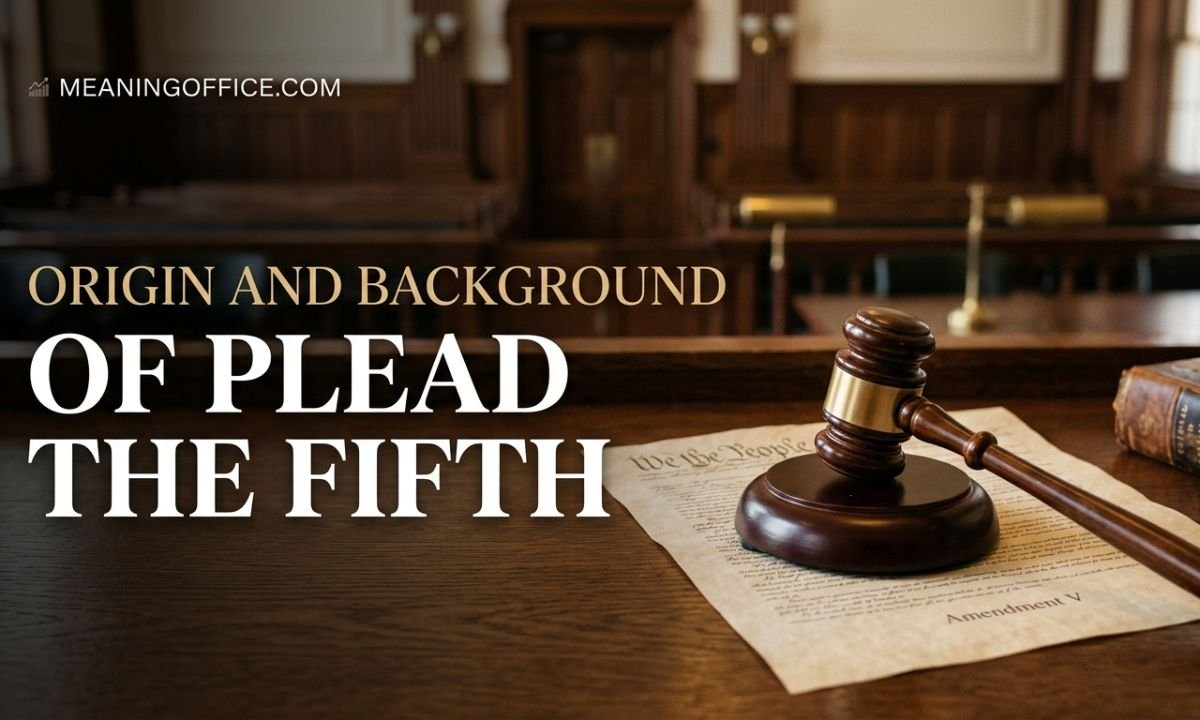
The Fifth Amendment was ratified in 1791 as part of the Bill of Rights. It says no person can be forced to be a witness against themselves in a criminal case.
The short phrase “take the Fifth” became popular in American English in the 1950s. Back then, many people refused to answer questions during government investigations.
Later, TV shows, movies, and news coverage spread the phrase worldwide. Today people in the UK and other countries use it too, even though the law behind it is American.
Plead the Fifth Meaning as Slang
As slang, it means “I’d rather not say.” The speaker is joking that the honest answer might make them look bad.
Key traits of the slang use:
- It is playful, not legal.
- It usually signals embarrassment or mischief.
- It invites the other person to guess.
- It rarely ends a conversation. Most people just laugh.
Plead the Fifth vs. Similar Expressions
| Expression | Meaning | Tone |
|---|---|---|
| Plead the Fifth | Refuse to answer to avoid trouble | Playful or serious |
| Take the Fifth | Same meaning, different wording | Playful or serious |
| No comment | Decline to speak | Neutral, formal |
| My lips are sealed | I won’t tell | Friendly |
| I’ll neither confirm nor deny | Won’t say yes or no | Dry, a bit formal |
| Next question | Move on | Light or blunt |
When Should You Avoid Using Plead the Fifth?
Skip it when:
- Someone asks a sincere, emotional question.
- You are talking to a partner about trust.
- A manager asks about a work problem.
- A friend is worried about you.
- You are joking about a real crime or a serious accusation.
In these moments, a joke can make you look evasive. A short honest answer works better.
Polite Alternatives to Plead the Fifth
Try these when you want to be kind but still skip the question:
- “I’d rather not get into that.”
- “Can we talk about that later?”
- “That’s a long story.”
- “I’ll tell you when I’m ready.”
- “Let’s just say it was an interesting night.”
Why Do People Use Plead the Fifth?
- To avoid embarrassment. It saves them from a blush-worthy answer.
- To keep things fun. It turns an awkward moment into a joke.
- To protect privacy. They can say “no” without saying “no.”
- To sound witty. The legal flavor makes it feel clever.
- Habit from pop culture. TV made it a go-to line.
Plead the First Meaning
Sometimes you will see “plead the First.” It is a joke twist on the original phrase.
The First Amendment protects free speech, religion, press, assembly, and petition. People say “I plead the First” to mean “I have the right to say what I want.”
It is not a legal shield for dodging questions. It is only a playful comeback, often used when someone gets called out for an opinion.
Impact of Plead the Fifth in Communication
This phrase can do three things in a chat.
- Lighten the mood. It softens an awkward question.
- Create curiosity. People often ask more, because the dodge hints at a story.
- Raise suspicion. If used too often, others may feel you hide things.
Use it sparingly. One playful dodge is cute. Ten in a row feels like a wall.
Is Plead the Fifth Safe for Social Media?
Yes, in most cases. It is a common, harmless phrase.
A few tips:
- Avoid using it on posts about real crimes, accidents, or accusations.
- Do not use it to joke about someone else’s serious legal trouble.
- Remember that screenshots last. A joke about “taking the Fifth” can look different out of context.
6th Amendment
People often mix up the Fifth and Sixth Amendments. Here is the quick difference.
| Amendment | Main protection |
|---|---|
| Fifth | Right against self-incrimination, due process, no double jeopardy |
| Sixth | Right to a speedy, public trial, a lawyer, and to confront witnesses |
So if you want to stay silent, think Fifth. If you want a lawyer or a fair trial process, think Sixth.
Plead the Fifth in Different Tones
Funny
“Did I eat your fries? I plead the Fifth, and the ketchup on my shirt.”
Playful
“Where did I go last night? Pleading the Fifth. Guess away. 😏”
Sarcastic
“Oh sure, I’ll tell you everything. Not. I plead the Fifth.”
Serious
“On my lawyer’s advice, I plead the Fifth.”
Tone matters more than the words. Emojis and punctuation help your reader know if you are joking.
Common Misunderstanding About Plead the Fifth
- “It means I’m guilty.” It does not. Innocent people may also use it.
- “I can use it for any question.” The legal right covers answers that could incriminate you.
- “It works with my boss or parents.” The law protects you against government compulsion, not everyday questions.
- “It is the same as Miranda.” Miranda warnings come from the same right, but they are a police process.
- “It is only American.” The law is American, but the slang is used worldwide.
Is Plead the Fifth a Texting Abbreviation?
No. It is a full phrase, not an acronym like LOL or BRB.
Some people type “plead the 5th” or “pleading the 5th” to save time. That is just a shortened spelling of the same phrase.
FAQs
What does plead the Fifth mean?
It means refusing to answer a question because the answer could hurt you or get you in trouble.
Does pleading the Fifth mean you are guilty?
No. It is a legal right, and it is not proof of guilt.
What is the difference between plead the Fifth and take the Fifth?
They mean the same thing. “Take the Fifth” is just another way to say it.
Can you plead the Fifth in casual conversation?
Yes. Most people use it as a joke to dodge an awkward question.
Is plead the Fifth a texting abbreviation?
No. It is a full phrase, though some people write “5th” instead of “Fifth.”
What does “plead the First” mean?
It is a joke that refers to free speech under the First Amendment. It is not a legal way to avoid questions.
Is plead the Fifth rude?
Usually not. It only feels rude if you use it to dodge a serious or sincere question.
Can you plead the Fifth in a civil case?
Yes, but a judge or jury may be allowed to draw a negative inference from your silence.
What is the 6th Amendment about?
It covers the right to a fair trial, a lawyer, and facing witnesses in a criminal case.
Where does plead the Fifth come from?
It comes from the Fifth Amendment to the U.S. Constitution, ratified in 1791.
Conclusion
Plead the Fifth” means you choose to stay silent. It comes from the Fifth Amendment in the US. This law says you do not have to say anything that can hurt you. Today, people also use it in daily talk. They use it to avoid a question in a funny or serious way.
Now you know the meaning and the 7 examples. You can use this phrase in jokes, texts, and real talks. Just keep the tone right. Use it for fun with friends, and take it seriously in legal matters. Next time someone asks an awkward question, you know what to say!
2 thoughts on “Plead the Fifth Meaning: 7 Powerful Examples & Usage”