

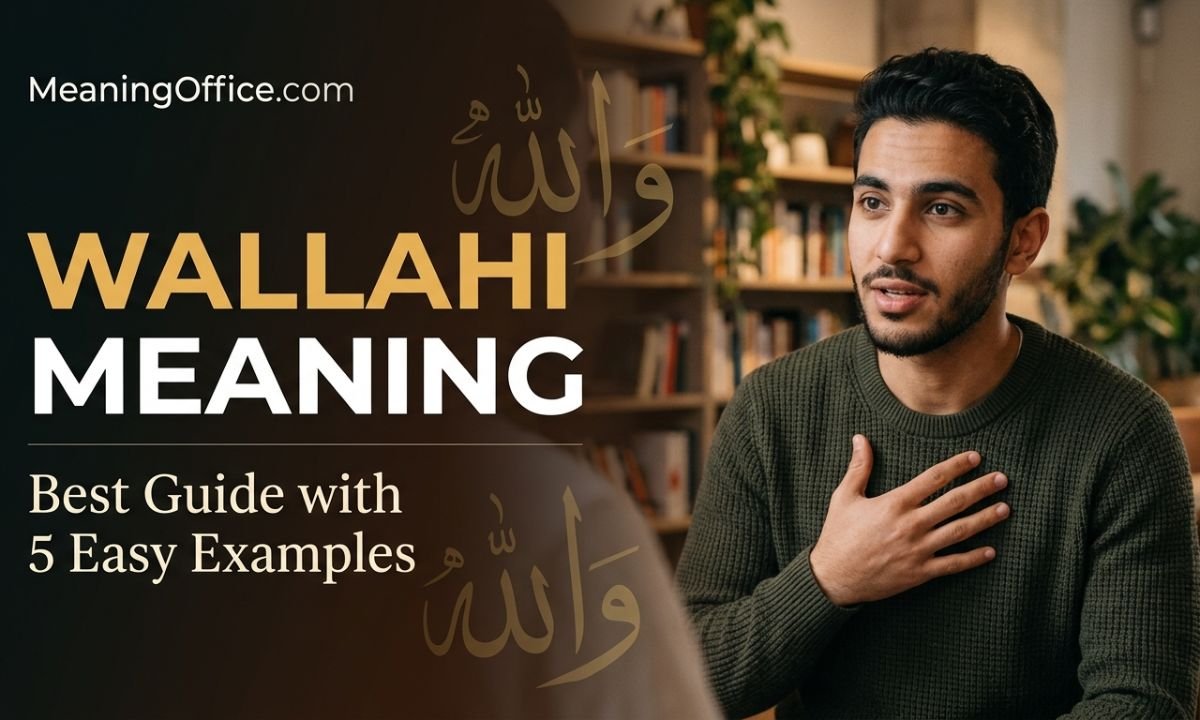
You may have seen the word “wallahi” in a chat or a comment. Maybe a friend sent it in a text and you didn’t know what it meant. You are not alone. Many people search for the wallahi meaning every day.
In short, wallahi means “I swear by Allah.” People say it when they want to sound honest or serious. It comes from Arabic, but it is now common online too. In this guide, you will learn what it means, where it is used, and how to use it the right way. You will also see 5 easy examples.
What Does Wallahi Mean in Text?
In text, wallahi means “I swear,” “for real,” or “I’m being honest.” You add it to a sentence to show you are serious.
“Wallahi, I didn’t see your message.”
Here the sender is saying, “I swear I didn’t see it.” Online, the word often shows up as wallah, walahi, wallahy, or wallaahi. All of them mean the same thing.
Does Wallahi Have Multiple Meanings?
The literal meaning stays the same. The tone changes depending on who says it and where.
| Context | What It Means | Tone |
|---|---|---|
| Religious | A real oath sworn by Allah | Serious, sacred |
| Everyday speech | “I swear” or “honestly” | Casual, emotional |
| Slang and texting | “For real,” “no joke” | Playful, emphatic |
| Surprise or shock | “No way!” or “Seriously?” | Dramatic |
Related forms: Arabic has a few close variants. Billahi and tallahi also mean “by Allah.” They use different Arabic oath particles but carry the same idea.
Where Is Wallahi Used?
People use wallahi across the Arabic-speaking world and far beyond it.
- Middle East and North Africa: in daily speech and family life
- Urdu, Turkish, and Somali speakers: borrowed through Muslim communities
- Multicultural urban slang: common in places like London and Paris
- Social media: TikTok, Snapchat, X, and gaming chats
Its spread online has made it a global slang word. That is also why many people use it without knowing where it comes from.
Examples of Wallahi in Conversation
Here are some natural examples:
- Sincerity: “Wallahi, I’ll be there at 6.”
- Defending yourself: “Wallahi, I didn’t take your charger.”
- Surprise: “He got the job? Wallahi?”
- Strong feeling: “That food was so good, wallahi.”
- Promise: “I’ll help you with it, wallahi.”
When to Use and When Not To Use Wallahi
When It’s Appropriate
- Talking with friends who use the word themselves
- Making a sincere promise you plan to keep
- Speaking in a Muslim or Arabic-speaking community
- Telling the truth about something that matters
When You Should Avoid It
- Formal or professional emails
- Jokes or sarcasm
- Situations where you aren’t sure the statement is true
- Around people who may find casual use disrespectful
- Any time you don’t understand what the word means
Simple rule: If you wouldn’t swear by God on it, don’t say wallahi.
See also:Bing Chilling Meaning: Fun Uses vs Bad Habits
Is Wallahi Friendly, Casual, Professional, or Flirty?
| Tone | Does Wallahi Fit? |
|---|---|
| Friendly | Yes, among friends who use it |
| Casual | Yes, very common |
| Professional | No, avoid it at work |
| Flirty | Rarely, and it can sound forced |
It is mostly a casual, emotional word. It suits close friends and family chats. It does not suit a boss, a client, or a formal message.
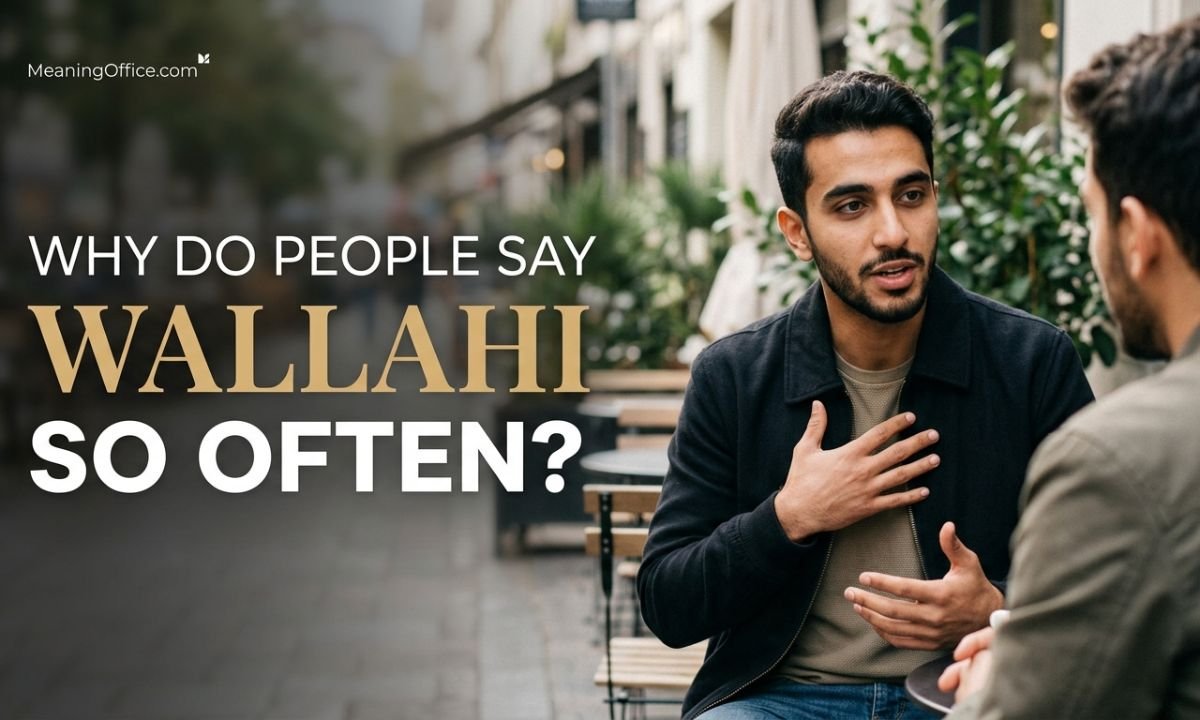
Why Do People Say Wallahi So Often?
To Sound Honest
When someone doubts you, wallahi adds weight. It tells the other person, “I’m not lying.”
To Convince Someone
People use it to win trust fast. “Wallahi, it’s true” feels stronger than “it’s true.”
To Add Emotion
It also works as an exclamation. You can use it when you’re shocked, angry, or excited.
Because It’s Part of Everyday Speech
For many native speakers, wallahi is a habit, like “honestly” or “swear to God” in English. Some use it dozens of times a day without thinking about it.
Is Wallahi Offensive?
No, wallahi is not an offensive word. It is not rude or vulgar.
It can still bother some people. Many Muslims believe swearing by Allah is a serious act, and they see casual or false use as disrespectful. Islamic teaching also covers what happens when an oath is broken, which is called kaffarah (expiation).
So the risk is not that the word is a “bad word.” The risk is using something sacred in a careless way.
Is Wallahi Only Used by Muslims?
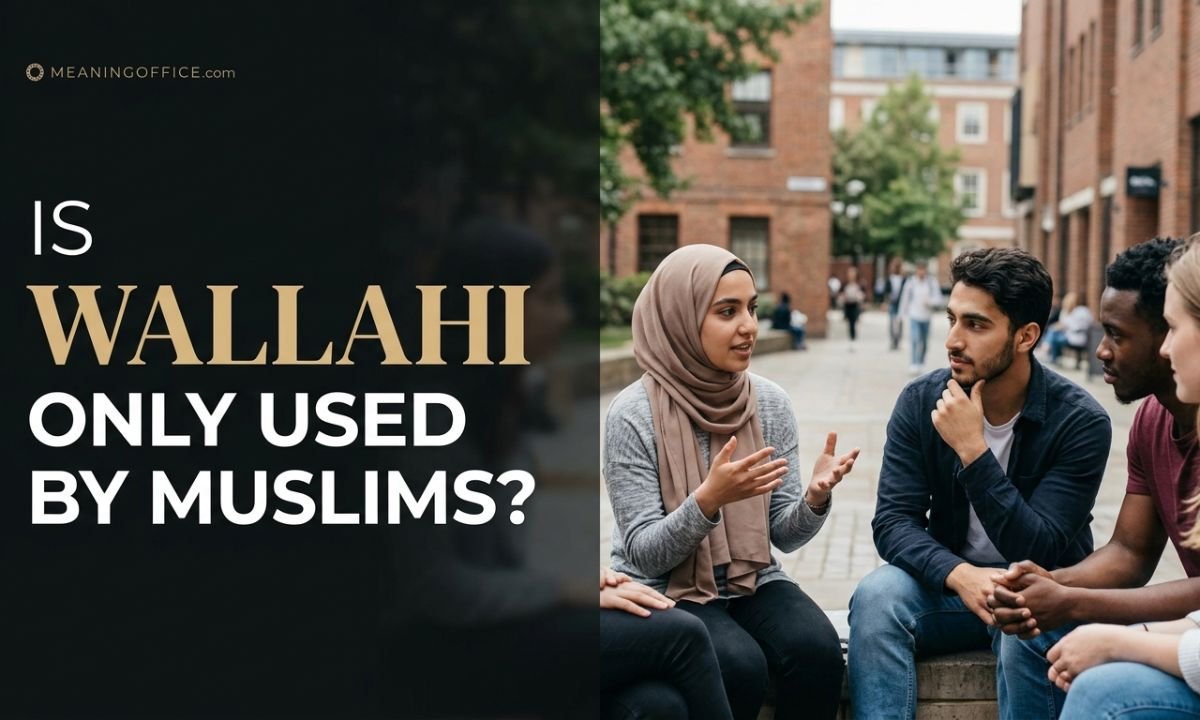
No. It began in Islamic tradition, but anyone can say it. Arabic-speaking Christians use similar phrases, and non-Muslims pick it up from friends, music, and social media.
If you are not Muslim, you can use it. Just be respectful, and don’t use it as a joke or while lying. People are more forgiving when they see you understand it.
Wallahi Arabic Meaning
In Arabic, wallahi is written واللهِ. It breaks down into two parts:
- Wa (و): “by” (an oath particle)
- Allahi (الله): “Allah” in the genitive form
Put together, it means “by Allah.” The Arabic word for oath is qasam (قسم). In Urdu, people say “Allah ki qasam,” which carries the same meaning.
Pronunciation: wal-LAH-hee (the “h” is soft).
Wallahi vs. Inshallah: These two are often confused.
| Phrase | Meaning | Used For |
|---|---|---|
| Wallahi | “I swear by Allah” | Truth and promises |
| Inshallah | “God willing” | Future plans |
| Mashallah | “God has willed it” | Praise or admiration |
Similar Slang Words or Alternatives
If you want the same effect without the religious weight, try these.
I Swear
The closest English match. “I swear I didn’t do it.”
Honestly (NGL)
Short for “not gonna lie.” It’s casual and works in any chat.
Trust Me
A simple way to ask for belief. “Trust me, it’s worth it.”
FR (For Real)
Common in texting. “FR, that was the best game.”
No Cap
Gen Z slang meaning “no lie.” “That movie was amazing, no cap.”
| Wallahi | Everyday Alternative |
|---|---|
| Wallahi, it’s true | I swear it’s true |
| Wallahi, I’m serious | FR, I’m serious |
| Wallahi, I’m not lying | No cap |
| Wallahi, believe me | Trust me |
Is Wallahi Still Popular in 2025?
Yes. It remains common in multicultural slang, drill and rap lyrics, and short-form video. The word keeps spreading through TikTok, gaming voice chats, and group messages.
Its popularity also leads to more debate. Some people see it as shared culture. Others think casual use waters down a sacred phrase. Both views are common, so context matters.
Common Mistakes People Make

Thinking It’s Just Internet Slang
It is not a meme word. It has real religious roots, and many people take it seriously.
Using It as a Joke
Saying “wallahi” for laughs, or to be ironic, can offend people who treat oaths with respect.
Using It While Lying
This is the biggest mistake. Swearing by God over something false is considered a grave matter in Islam. Even among friends, it can cost you trust.
Using It in Business Communication
Wallahi doesn’t belong in formal emails, interviews, or client chats. Use “I assure you” or “honestly” instead.
See also:Quotient Meaning: Clear Definition & Examples
FAQs
What does wallahi mean in English?
It means “I swear by God” or “by Allah.” People use it to stress that they are telling the truth.
What does wallahi mean in text?
In texting, it means “I swear” or “for real.” It shows the sender is being serious or honest.
What does “say wallahi” mean?
It means to swear that something is true. It is like saying “swear to God” in English.
Is wallahi a bad word?
No. It is not a curse word. It is a religious expression, so it should be used with care.
Can non-Muslims say wallahi?
Yes, they can. They should use it respectfully and understand what it means.
Is wallahi the same as wallah?
Yes. Both mean “by Allah.” The spelling varies by region and personal habit.
Is wallahi haram?
Swearing by Allah is allowed when you are truthful. Swearing falsely, or using it carelessly all the time, is discouraged. For a firm ruling, ask a qualified scholar.
Can I use wallahi at work?
It’s best not to. Use neutral words like “honestly” or “I assure you” in professional settings.
Final Thought
Wallahi means “I swear by Allah,” but its everyday use runs from deeply sincere to just a habit. Use it only when you mean it, and keep it out of jokes and formal settings. When you aren’t sure it fits, “I swear,” “no cap,” or “FR” will get your point across without the religious weight.