

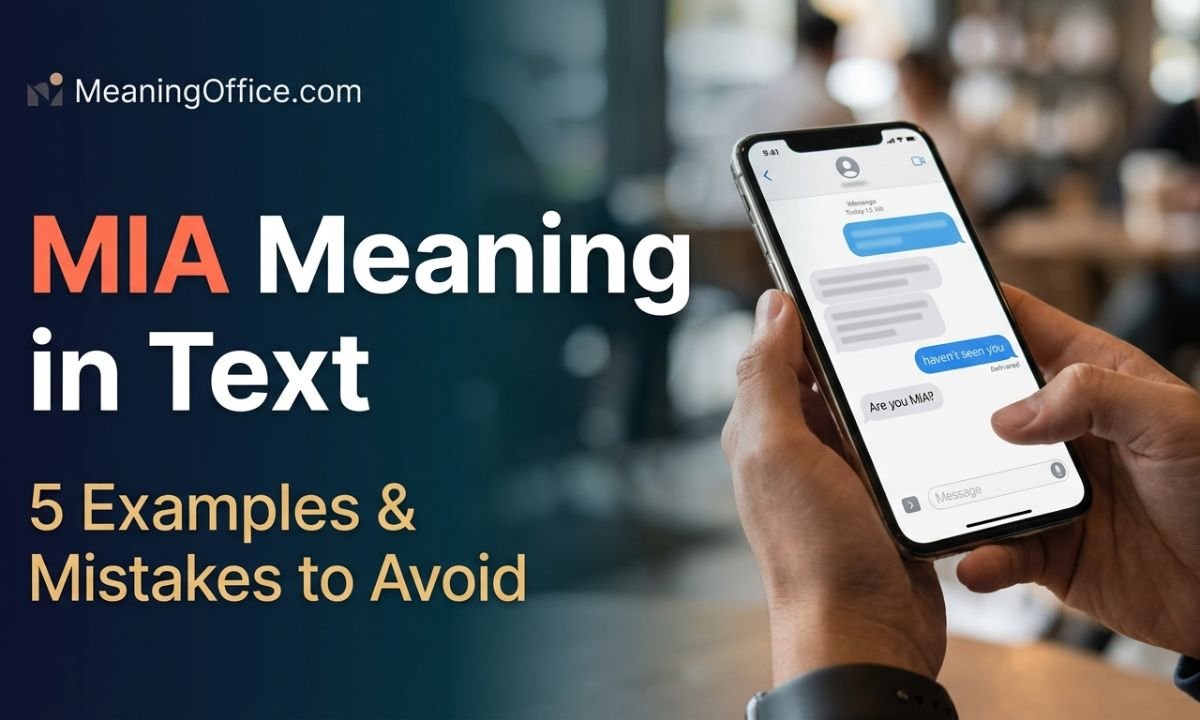
You open your group chat and see, “Where have you been? You’re totally MIA!” Your friend isn’t reporting you missing. They’re saying you’ve been quiet. The slang is common, but the tone can change a lot depending on who says it.
This guide explains the MIA meaning in text, shows real examples, compares it with similar terms, and covers the mistakes to avoid.
Quick Answer: What Does MIA Mean in Text?
MIA means “missing in action.” In texting, it describes someone who has gone quiet, stopped replying, or been absent for a while.
Example: “Sorry I was MIA all week. Work got crazy.”
MIA Full Form
The full form of MIA is Missing In Action. It’s an acronym, so each letter stands for one word:
- M – Missing
- I – In
- A – Action
What Does MIA Stand For?
In everyday chat, MIA stands for “missing in action.” It has a few other meanings outside texting:
Always check the context before assuming which one someone means.
MIA Meaning as Slang
As slang, MIA has nothing to do with war. It simply means “not around.” You can use it for a person, a team member, or even a thing, like “the WiFi is MIA again.”
It also works as a casual description of your own behavior. Saying “I’ve been MIA” is a quick way to admit you’ve been out of touch.
See also:Quotient Meaning: Clear Definition & Examples
Is MIA Rude, Offensive, or Neutral?
MIA is mostly neutral. It’s a mild, casual term and doesn’t count as a slur or an insult.
The tone depends on delivery:
- Friendly: “Hey stranger, you’ve been MIA!”
- Annoyed: “You’re always MIA when I need help.”
- Self-aware: “My bad, I went MIA.”
The word itself is harmless. The context and punctuation decide whether it feels warm or sharp.
Where Is MIA Commonly Used?
- Text messages and iMessage
- WhatsApp and group chats
- Instagram captions and comments
- TikTok videos and bios
- Snapchat replies
- Gaming lobbies and Discord servers
- Workplace chats like Slack (with care)
Real-Life Examples of MIA in Text
Here are five examples of MIA in text, plus one tense one, so you can see how the tone shifts.
Friendly Example
“Hey you! Haven’t heard from you in ages. You’ve been so MIA, I miss you!”
Casual Example
“Sorry I was MIA yesterday. My phone died and I fell asleep.”
Social Media Example
“Been MIA from posting lately, but I’m back with something new!”
Group Chat Example
“Where’s Jake? He’s been MIA since we planned the trip.”
Gaming Example
“Our healer went MIA right before the boss fight.”
Argumentative Example
“You’re MIA every time something important comes up.”
The last one carries blame. That’s where MIA can stop being playful.
MIA in Different Contexts
MIA Between Friends
Friends use MIA as a gentle nudge. It says “I noticed you’re gone” without making a big deal of it. A joke and an emoji usually keep it light.
MIA in Relationships
In dating, MIA can feel heavier. “You’ve been MIA” may mean “I feel ignored.” Partners often hear the hurt behind it, so be kind when you use it.
MIA at Work
At work, people say “he’s MIA on this project” casually, but it can sound like criticism. Prefer clearer wording in emails and reports, such as “has not responded” or “is currently unavailable.”
MIA in Gaming
Gamers use MIA for a teammate who disappears mid-match, or for an enemy who vanished from the map. It’s quick and fits fast chat.
MIA on Social Media
Creators use it to explain gaps in posting. Followers use it to say a creator has gone quiet. It’s casual, short, and fits captions well.
Origin and Background of MIA
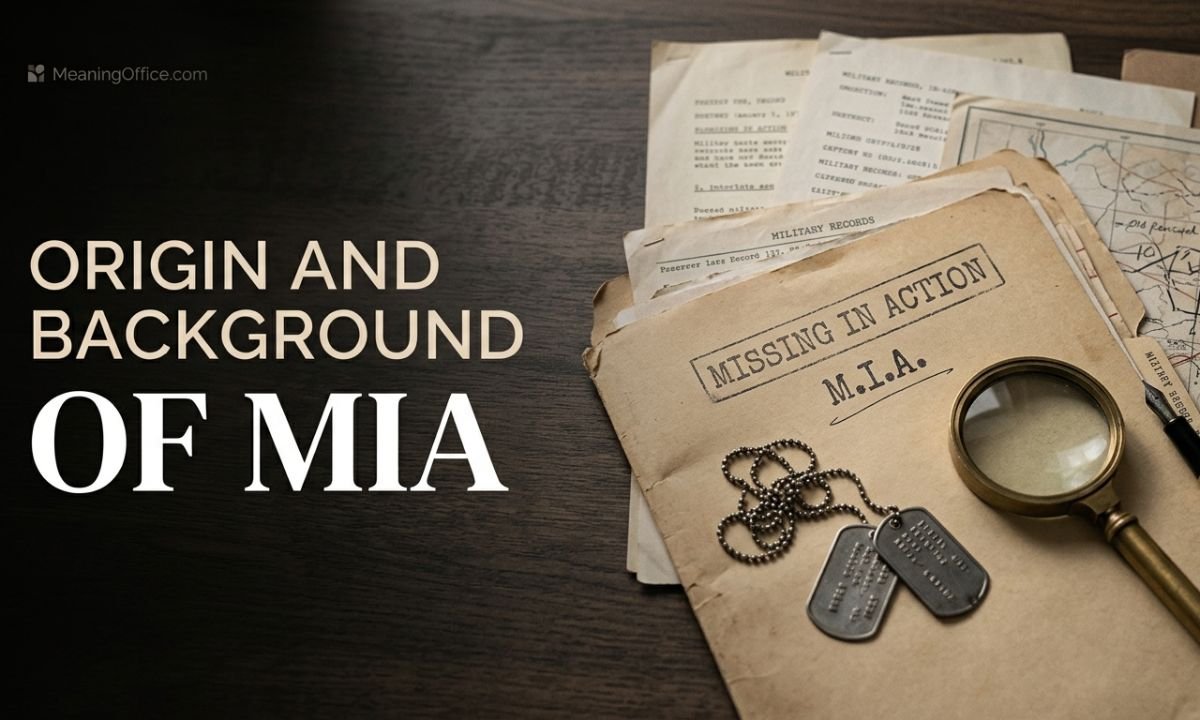
MIA began as a military term. Dictionaries trace its first recorded use to the 1940s, in the period around World War II. It described a service member who couldn’t be found after a battle, whose fate was unknown.
Over time, people borrowed it for ordinary life. Today it also describes anyone or anything that’s unexpectedly absent. The figurative use is now common in news, sports writing, and everyday speech.
Because of its serious origin, some people, especially military families, may find casual use insensitive. Keep that in mind in the right company.
MIA vs. AFK vs. Ghosting
These terms overlap, but they aren’t the same.
| Term | Meaning | Tone | Duration |
|---|---|---|---|
| MIA | Absent or out of touch | Neutral, casual | Hours to months |
| AFK | Away from keyboard | Neutral, temporary | Minutes to hours |
| Ghosting | Cutting contact on purpose | Negative | Often permanent |
MIA vs. AFK
AFK is short and temporary. You say “brb, AFK” when you step away for a snack. MIA is longer and usually describes a stretch of silence, often noticed by other people.
MIA vs. Ghosting
Ghosting is a deliberate choice to stop talking, usually in dating. MIA doesn’t assume intent. Someone can be MIA because they’re sick, busy, or off their phone. Ghosting carries blame, while MIA often doesn’t.
When Should You Avoid Using MIA?
Skip MIA in these situations:
- Formal emails or reports. Use plain, professional language instead.
- Serious emergencies. If someone may genuinely be in danger, don’t use a joke term.
- Around military families. The original meaning may hit close to home.
- When you’re upset. It can sound like an accusation.
- With people unfamiliar with slang. They may take it literally.
Polite Alternatives to MIA
Casual Alternatives
- “Haven’t heard from you in a while.”
- “Long time no talk.”
- “Where have you been hiding?”
- “You’ve been quiet lately.”
- “Off the grid”
Professional Alternatives
- “Has been unavailable.”
- “Has not responded yet.”
- “Is out of office.”
- “I haven’t received an update.”
- “Let’s reconnect on this.”
Why Do People Use MIA in Texting?
- It’s quick. Three letters replace a full sentence.
- It sounds light. It softens a potentially awkward topic.
- It’s widely understood. Most people already know it.
- It adds personality. It fits playful or casual chat.
The Impact of MIA on Communication
MIA can help or harm a conversation. Used kindly, it opens the door for a catch-up. Used sharply, it can make someone feel guilty.
It also shortens messages, which suits fast chats. The downside is vagueness. “You’re MIA” doesn’t say whether you’re curious, worried, or annoyed. Add a bit of context so the other person understands your tone.
Is MIA Safe for Social Media?
Yes. MIA is safe for Instagram, TikTok, X, Snapchat, and similar platforms. It contains no explicit or harmful meaning, so it won’t trigger content filters.
It’s also fine for younger users. Just avoid using it in a mocking way about someone’s real absence, such as a missing person case.
MIA Examples by Tone
Friendly
“Hey! You’ve been MIA. Let’s catch up soon.”
Casual
“Sorry, I was MIA this weekend.”
Playful
“Oh look, the MIA legend finally returns!”
Concerned
“You’ve been MIA for days. Is everything okay?”
Argumentative
“You go MIA whenever we need you.”
Gaming
“Where’s our tank? He’s MIA.”
Social Media
“Back after being MIA for a month. Miss me?”
Common Misunderstandings About MIA
- “MIA always means someone is in danger.” It almost never does in casual texting.
- “MIA is the same as ghosting.” Ghosting is intentional. MIA isn’t always.
- “MIA is only for people.” You can also say a file, a package, or your motivation is MIA.
- “MIA is always rude.” Mostly it’s playful. The tone is what matters.
- “MIA is a name.” Mia is a name, but the all-caps slang means missing in action.
How to Respond When Someone Says “You’re MIA”
Keep your reply honest and warm. Try one of these:
- Apologize and explain. “Sorry! Work was nonstop. I’m back now.”
- Keep it light. “Guilty! Missed you too.”
- Reconnect. “Let’s catch up this weekend.”
- Set a boundary. “I needed some downtime, but I’m here now.”
If the message sounds hurt, acknowledge the feeling first. A short, sincere reply works better than a joke.
See also:Wallahi Meaning: Best Guide with 5 Easy Examples
FAQs
What does MIA mean in text?
MIA means “missing in action.” In texting, it describes someone who has gone quiet or stopped responding.
What is the full form of MIA?
The full form of MIA is Missing In Action.
Is MIA slang or an acronym?
It’s both. It’s an acronym that people also use as everyday slang.
Is MIA the same as ghosting?
No. Ghosting is a deliberate choice to cut contact, while MIA simply means someone is absent or out of touch.
Is MIA rude?
Not by itself. It’s neutral, but the tone of your message can make it sound friendly or critical.
Can I use MIA at work?
It’s fine in casual team chats, but use clearer wording like “unavailable” in formal emails.
What does “went MIA” mean?
It means the person disappeared or stopped communicating for a while.
How do I reply to “you’re MIA”?
Say sorry if needed, give a short reason, and reconnect warmly.
What’s the difference between MIA and AFK?
AFK means briefly away from the keyboard, while MIA usually describes a longer, noticed absence.
Is MIA the same as the name Mia?
No. The name Mia is a given name, while MIA in capitals is the slang term.
Final Thought
MIA started as a serious military term and now lives in everyday chat as a simple way to say “you’ve gone quiet.” It’s friendly, short, and easy to understand. Use it playfully with friends, choose gentler words when someone may be hurting, and swap it for clearer language at work. Match the tone to the person, and MIA will keep your messages natural instead of awkward.
1 thought on “MIA Meaning in Text: 5 Examples & Mistakes to Avoid”